Diagnostic imaging has advanced rapidly over the past two decades. High-resolution digital radiography, CT and MRI have dramatically improved our ability to identify osseous pathology and, increasingly, soft tissue change. Yet despite these advances, there remains a gap between what imaging suggests and what is truly present within a joint. Can small animal arthroscopy bridge that gap?
For many orthopaedic conditions, particularly those involving cartilage, subchondral bone, and intra-articular soft tissues, arthroscopy does more than confirm a diagnosis – it frequently alters treatment decisions and long-term management.
This article explores what arthroscopy adds to our diagnostic work-up and considers when it is genuinely indicated and when it is not, as well as some pointers for safe arthroscopy in small animals.
Why use arthroscopy?
Radiography remains the first-line imaging modality for most orthopaedic investigations. However, radiographs are an indirect assessment of joint health. They reveal bone reaction, remodelling, and mineralised fragments, but they do not allow direct evaluation of cartilage integrity, meniscal pathology, synovial disease or subtle fissuring.
Even CT, while superior for fragment identification and subchondral bone assessment, cannot directly evaluate cartilage integrity or reliably stage chondral erosion.
The benefits of arthroscopy include:
-
Direct visualisation of articular cartilage
-
Assessment of lesion stability
-
Identification of concurrent pathology
-
Dynamic probing of soft tissues
-
Immediate therapeutic intervention
Most importantly, arthroscopy provides staging information that imaging cannot. The degree of cartilage erosion, presence of kissing lesions, synovial proliferation and meniscal integrity all influence prognosis and postoperative management.
In clinical practice, it is this sort of additional information, rather than simple confirmation of disease, that most often changes how we proceed.
Arthroscopy of the elbow joint
Elbow arthroscopy is widely considered the gold standard for intra-articular assessment of medial coronoid disease.
When is it indicated?
Elbow arthroscopy is most likely to change management in:
-
Medial coronoid disease (fragmented or fissured)
-
Medial compartment disease
-
Osteochondritis dissecans (OCD) of the medial humeral condyle
-
Unexplained forelimb lameness with equivocal imaging
Radiographs frequently underestimate coronoid pathology. Fragmentation may be absent, and sclerosis of the ulnar trochlear notch may be the only visible change. CT improves fragment detection but cannot determine cartilage condition or the extent of medial compartment cartilage erosion.
Elbow arthroscopy allows:
- Identification of fissures without discrete fragments
- Assessment of cartilage softening (chondromalacia)
- Detection of kissing lesions on the medial humeral condyle
- Evaluation of medial compartment cartilage loss
This is critical because management differs significantly between early fissuring and advanced medial compartment disease. In cases where cartilage erosion extends beyond the coronoid process and significant humeral cartilage loss is present, simple fragment removal may not alter progression meaningfully. In contrast, early disease with focal pathology may respond well to debridement and subtotal coronoid ostectomy.
Without arthroscopy, these distinctions cannot be made reliably. Furthermore, arthroscopy often reveals bilateral disease, even in clinically unilateral cases, influencing both surgical planning and client counselling.
Arthroscopy of the stifle joint
The stifle presents a different but equally important set of diagnostic challenges. While cruciate rupture is usually diagnosed clinically and radiographically, arthroscopy frequently reveals concurrent pathology that changes intraoperative decisions and prognosis.
When is stifle arthroscopy indicated?
Stifle arthroscopy is most likely to alter management in:
-
Partial cranial cruciate ligament (CrCL) rupture
-
Suspected meniscal injury
-
Chronic synovitis
-
Osteochondritis dissecans of the femoral condyle
Partial CrCL tears are notoriously difficult to diagnose accurately via imaging alone. Radiographs may show effusion without instability. Arthroscopy permits direct visualisation and probing of individual ligament bundles, allowing accurate staging of partial tears. This influences surgical decision-making. In some early partial tears, stabilisation may be delayed or combined with medical management, whereas advanced partial rupture with significant fibre disruption warrants definitive surgical stabilisation.
Meniscal injury is another area where arthroscopy changes management. Meniscal tears may not be evident on imaging. Arthroscopic evaluation allows probing of the caudal horn of the medial meniscus and identification of bucket-handle or radial tears. Failure to address concurrent meniscal pathology is a recognised cause of persistent postoperative lameness.
Additionally, arthroscopy frequently identifies:
- Synovial hyperplasia
- Cartilage fibrillation
- Early osteoarthritis that is not visible radiographically
These findings influence postoperative rehabilitation protocols and prognostic discussions.
What arthroscopy reveals that other imaging cannot
Across joints, the most clinically significant findings include:
- Cartilage softening prior to erosion
- Microfissuring of subchondral bone
- Meniscal surface tears
- Synovial pathology
- Extent of kissing lesions
Radiographs detect the result, but arthroscopy detects the cause. For example, in medial compartment elbow disease, CT may confirm a coronoid fragment. Arthroscopy determines whether there is focal disease amenable to debridement or diffuse cartilage loss consistent with advanced compartment collapse.
That distinction materially changes both surgical approach and long-term expectation.
When arthroscopy is not indicated
Like all interventions and diagnostic tests, arthroscopy is not benign. It carries the risks of certain issues, such as:
- Iatrogenic cartilage trauma
- Instrument-related damage
- Fluid extravasation
- Increased anaesthetic time
In cases where advanced osteoarthritis is already evident radiographically and no therapeutic intervention is planned, arthroscopy is unlikely to alter the outcome.
Similarly, in complete cranial cruciate rupture with clear instability and radiographic effusion, some surgeons elect to proceed directly to stabilisation surgery, particularly where meniscal pathology is addressed via arthrotomy.
In conditions primarily involving subchondral bone without intra-articular soft tissue involvement, such as certain incomplete fractures, CT may provide more clinically relevant information than arthroscopy.
The key question should always be: will this information change what I do next? If the answer is no, arthroscopy may not be justified.
Safe arthroscopy
Safe veterinary arthroscopy requires training and experience. Poor portal placement or limited familiarity with joint anatomy increases the risk of iatrogenic trauma. It’s not just about knowing when to reach for the scope, but how to use it safely and efficiently to minimise the risk of damage.
Final thoughts
As imaging modalities continue to evolve, veterinary arthroscopy has an important role and direct visualisation of intra-articular pathology remains uniquely informative. It identifies meniscal injury and helps to assess coronoid disease, enabling vets to adjust their approach to case management.
Remember - the damage you can't see on radiographs is often the damage that matters most.
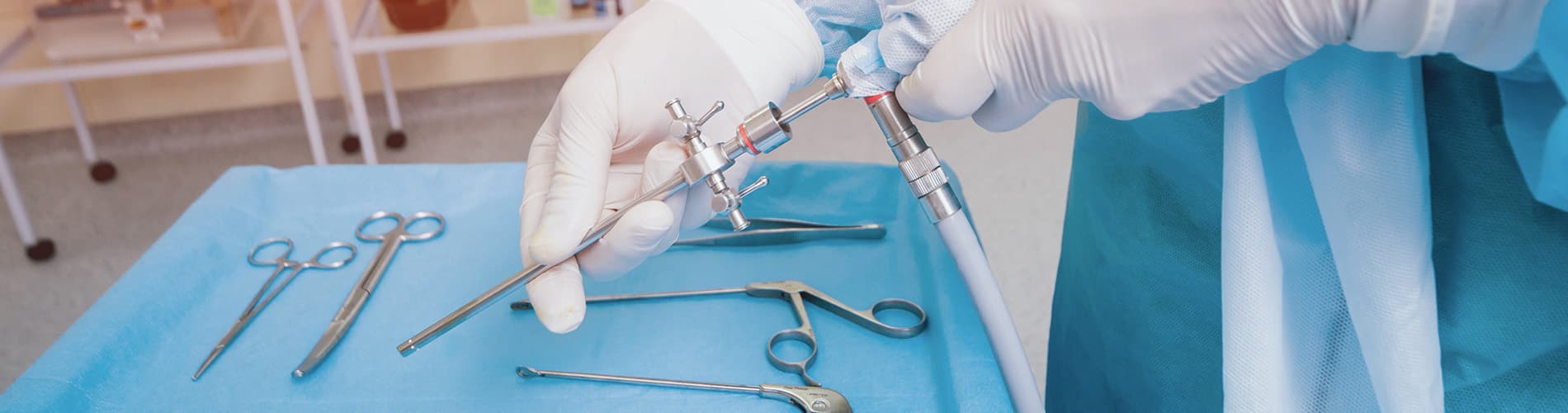

Arthroscopy Techniques in Small Animal Practice
ISVPS Foundation Certificate (FCert)
 Apr 2026
 Swindon/Online