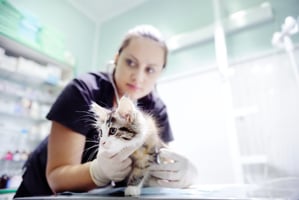
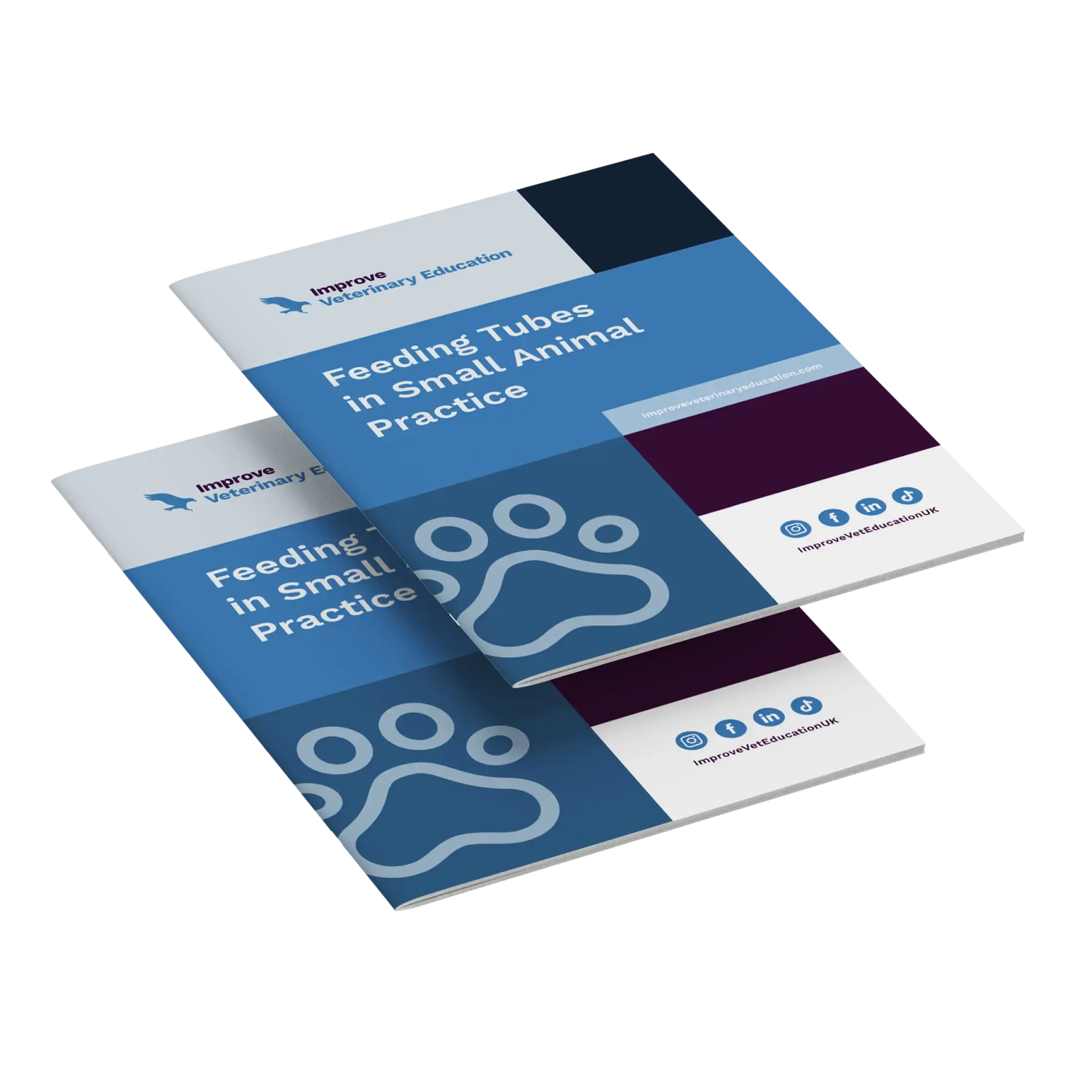
Nutritional support is a cornerstone of recovery in small animal practice. Yet feeding tube placement is often delayed due to uncertainty around when to intervene, which tube to choose, and how much to feed.
This pocket guide is here to help. With a handy algorithm to help with tube selection, a checklist to help decide when a tube is indicated, and a step-by-step how-to feed guide, it's the perfect thing to keep in your phone for your next case needing enteral support.
Inside the guide:
The pocket guide answers questions like:
- When is a feeding tube indicated?
- How do I choose the right type of feeding tube?
- How long can a nasogastric tube be left in place?
- What sort of diet should I be using with a feeding tube?
- How much food does my patient need?
- How do I safely feed a cat or dog using a feeding tube?
Remember: A feeding tube should be considered when a patient has voluntarily consumed less than 80% of their Resting Energy Requirement (RER) for more than three days. Acting early helps prevent muscle loss, delayed wound healing, and prolonged recovery.
This free, easy-to-use guide will guide you through every stage.
_OL_CourseThumb-1.jpg?width=500&height=300&name=IVE_GPCert(SAM)_OL_CourseThumb-1.jpg)

Small Animal Medicine
ISVPS General Practitioner Certificate (GPCert)
Postgraduate Certificate (PgC)
 April 2026
Author