A new study from the Royal Veterinary College’s (RVC) VetCompass Programme has revealed the scale of serious welfare issues associated with dog breeds that have abnormal eyelid positioning that many people still consider as "normal for the breed". This research shows how atypical eyelid positioning is connected to serious eyelid conformation disorders in companion dog breeds in the UK, including entropion (eyelid turns inwards) and ectropion (eyelid turns outwards).
It is hoped these findings will encourage owners to avoid acquiring types of dogs with innately unhealthy eyelids and to more effectively manage these disorders in dogs already affected to minimise the resultant suffering for these animals.
Healthy eyelid positioning and function in dogs play an important role in maintaining good welfare. During natural blinking with normal eyelids, the smooth edge of the eyelid acts like a wiper blade on a car window to keep the transparent surface at the front of the eye (the cornea) clean and moistened with tears. In dogs with in-turned eyelids, the hairs on the outside of the eyelid rasp up and down the eyeball like sandpaper, causing significant pain and suffering. Dogs with out-turned eyelids also lose this natural wiper-blade effect as these eyelids hang outwards uselessly and the eyeball becomes prone to damage by debris building up and drying out. These eyelid disorders can lead to the development of eye ulcers, blindness and may even require the surgical removal of their eyes when the eye damage becomes too severe.
Conducting this research on a study population of 2,250,417 dogs, which is the largest study of its kind, the RVC VetCompass team analysed a random sample of 3,029 dogs diagnosed with conformational eyelid disorder cases in primary veterinary care practices during 2019 in the UK. Of these cases, 2,752 (90.86 percent) involved entropion and 344 (11.36 percent) involved ectropion cases. These findings revealed that some dog breeds are diagnosed with much higher levels of eyelid disease each year than others. These results may even be an underestimate of the true scale of the issue, as it is likely that many more dogs within these predisposed breeds are not formally diagnosed because their unhealthy eyelids are considered "normal for breed".
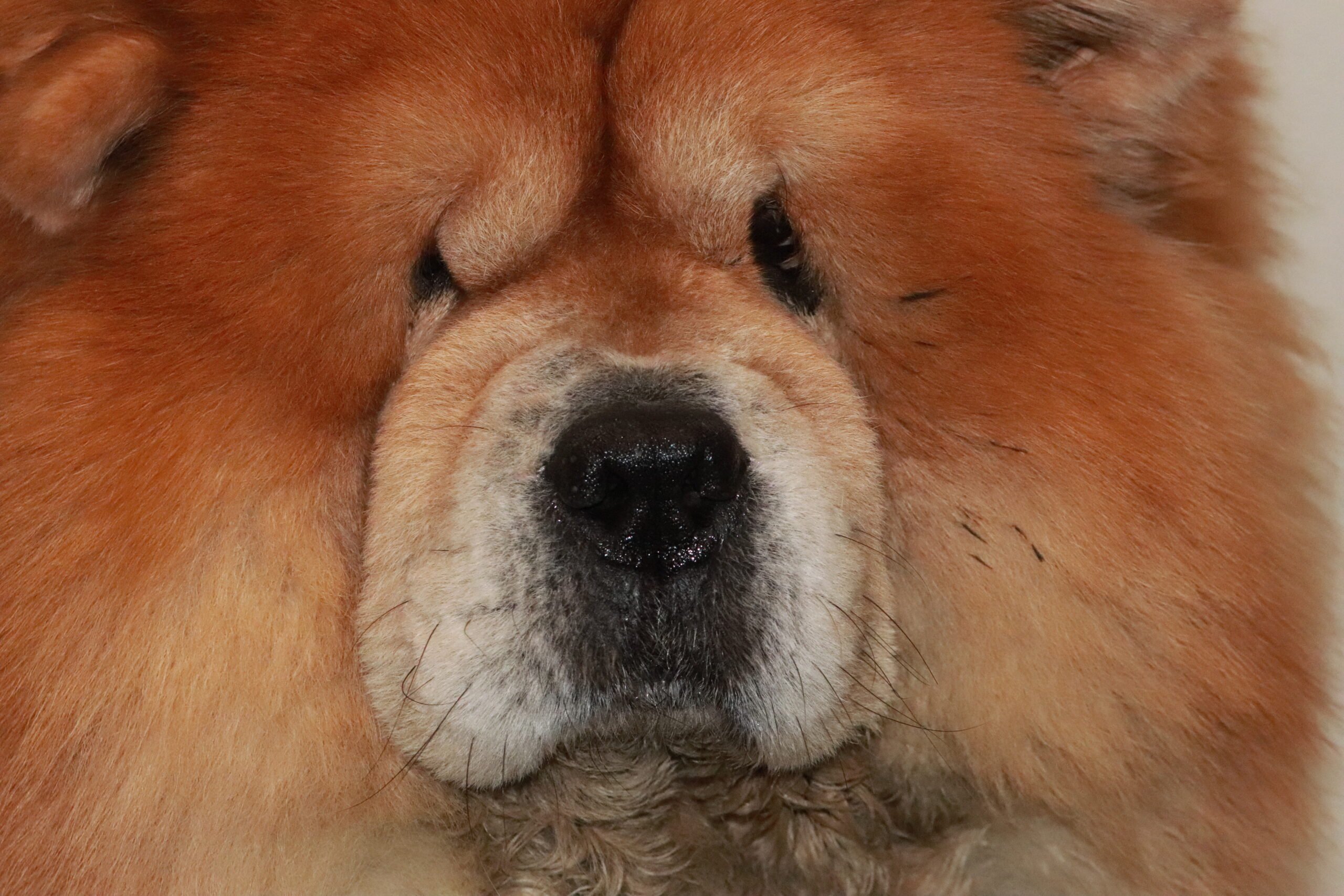
Compared to a low frequency of just 0.36 percent (approximately one in 300 dogs) for conformational eyelid disorder across all 2,250,417 dogs, the study identified several breeds where conformational eyelid disorder was so common as to be considered as a disease that is almost "normal for breed". In the single year of the study, conformational eyelid disorder was formally diagnosed in 15.5 percent of Shar-Pei, 9.6 percent of Chow Chow, 9.5 percent of Neapolitan Mastiff, 6.3 percent of Clumber Spaniel, 6.1 percent of Saint Bernard and 4.9 percent of English Bulldog dogs.
Additional key findings of the study include:
- Key factors that predicted higher risk of diagnosis with conformational eyelid disorder include breed (including Shar-Pei, Chow Chow, Neapolitan Mastiff, Clumber Spaniel, Saint Bernard and English Bulldog and several others); age (1-3 years old); being a purebred; being a spaniel; having folded or pendulous ear carriage; and being a brachycephalic (flat-faced) breed
- Overall, 0.33 percent of dogs had in-turned eyelids (entropion) and 0.04 percent had out-turned eyelids (ectropion)
- The most common clinical signs recorded among in-turned eyelid cases were ocular discharge (47.7 percent), runny eye (27.8 percent) and squinting (22.9 percent)
- Of the dogs with in-turned eyelids, four-in-ten suffered from conjunctivitis each year and more than one quarter suffered from corneal ulceration each year
- Almost one in five of the dogs with in-turned eyelids (18.2 percent) were operated on each year to try to correct the abnormal eyelid shapes
- Flat-faced (brachycephalic) dog breeds as an overall group showed 1.7 times the risk of conformational eyelid problems than general crossbred dogs
- Purebred dogs were 2.6 times more likely to have conformational eyelid problems than general crossbred dogs, while newer "designer" dog breeds (such as the Cockapoo, Cavapoo and Labradoodle) were only half as likely to have conformational eyelid problems than general crossbred dogs
- Spaniel breeds as an overall group showed 2.5 times the risk of conformational eyelid problems than general crossbred dogs
- Many affected dogs had additional suffering from other disorders linked to the abnormal eyelid shapes and the surgery required to try to reverse the eyelid extreme conformations
- Several breeds showed almost no dogs with eyelid problems. These breeds included the Border Collie (0.01 percent); Whippet (0.02 percent); Husky (0.03 percent); Greyhound (0.0 percent); and Lurcher (0.0 percent). These breeds are all generally considered to have body shapes that are very natural and therefore to have good overall innate health.
Dr Dan O’Neill, associate professor of companion animal epidemiology at the RVC, and lead author of the paper, said: “This new paper highlights that even though some diseases are so common that they become almost ‘normal for breed’, this should never be interpreted as being ‘normal for a dog’. This paper shows the huge scale of suffering caused by conformational eyelid disorders in some dogs breeds and suggests it is finally time that everyone who cares about dogs stands up and shouts ‘no more’ to these forms of planned canine suffering due to our human desire to own unnatural and extreme body shapes in dogs.”