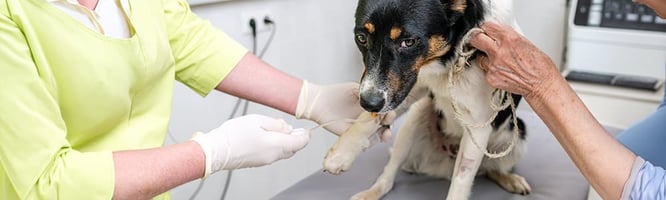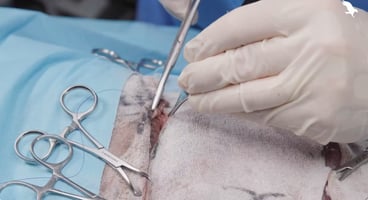
From the moment a patient arrives at the veterinary practice, the risk of exposure to harmful contamination is increased. Therefore, the provision of an aseptic theatre environment is essential to minimise the risk of surgical site infections (SSIs).
The principles behind infection control in the surgical environment involve limiting contamination of the surgical site with microorganisms from the patient, surgical team, operating theatre and surgical equipment. This can be achieved by controlling these aspects of the theatre environment.
What are surgical site infections?
SSIs are an example of nosocomial, or hospital-acquired, infections (HAI) that occur in a location where surgery has taken place. SSIs can be superficial infections involving the skin or, more seriously, can involve the tissues under the skin, organs or implanted material.
SSIs can be superficial infections involving the skin or, more seriously, can involve the tissues under the skin, organs or implanted material
SSIs commonly develop in superficial tissue within 30 days of surgery; however, if implants are used, the infection can affect deeper tissues, and signs may not become evident until several months later (NICE, 2008). SSIs create an increased economic burden for practice and owner, with increased visits, lengthy hospitalisation and additional therapies, surgeries and diagnostic procedures often necessary (Nicoll et al., 2014).
Although there are no current guidelines for reporting incidents, SSIs have been reported in 0.8 to 18.1 percent of surgical patients (Garcia Stickney and Thieman Mankin, 2018), highlighting a significant threat to veterinary patients.
How do we minimise the risk of SSIs?
Contamination is caused by endogenous sources (the patient’s microbial flora) or, less commonly, exogenous sources (surgical field contamination, including the surgical team, instruments and equipment). Therefore, the efficacy of the team in preparing the surgical environment and patient, and the standard of practice protocols regarding wound management, can directly impact the risk of SSIs.
Exposing a surgical wound to either endogenous or exogenous flora can result in bacterial colonisation of the wound. The patient is usually the primary source of the pathogens involved (Dohmen, 2006). In addition to the exposure of the open wound to bacteria, the risk of SSIs is significantly elevated with increased surgical time, increased persons present during surgery and a contaminated surgical wound (Eugster et al., 2004).
To maintain surgical asepsis, it is essential to classify each surgical procedure in relation to the degree of any present infection
The type of surgery performed will also influence the infection control procedures used. In order to maintain surgical asepsis, it is essential to classify each surgical procedure in relation to the degree of any present infection and plan the day accordingly to maximise efficiency and lower contamination risk.
Surgical checklists
Checklists are a tool designed to reduce patient morbidity and mortality by providing a list of actionable tasks that are crucial to the performance of a specific process. Surgical checklists should be used to identify patient risks before surgery, so strategies can be discussed and implemented to minimise any risks to patients and staff (Mayer and Shepard, 2016). Furthermore, the implementation of a surgical safety checklist can increase theatre efficiency by improving team communication and providing a standardised approach to theatre management as well as complying with clinical governance to improve standards of patient care.
The implementation of a surgical safety checklist can increase theatre efficiency by improving team communication and providing a standardised approach to theatre management
In 2009, the Safe Surgery Saves Lives (SSSL) initiative was developed, and figures reported showed a reduction in patient mortality from 1.5 to 0.8 percent following the introduction of the checklist.
Patient preparation
The purpose of preoperative skin preparation is to remove transient microorganisms from the skin and reduce the residual microbial count to subpathogenic levels in a short space of time, with as little tissue irritation as possible (Fossum, 2018). While it is impossible to make the skin completely sterile, the aim is to free the surgical site from a large microorganism burden prior to surgery.
Skin preparation has mechanical and chemical elements. The mechanical element is caused by friction, such as rubbing the skin, which is necessary to remove bacteria. It also enables antiseptic solutions to penetrate the deeper layers of the dermis, where there are resident microorganisms. Chemical elements involve the destruction of microorganisms and the prevention of “rebound” microbial growth after scrubbing.
There are a variety of skin preparation methods, solutions and techniques in use in veterinary practice, but it is important to base protocols on the evidence base. Studies have shown that most practices have room for improvement in their skin preparation protocols (Evans et al., 2009).
Theatre management
Veterinary theatres will vary considerably because of the building structure. An operating theatre, however, should be designed with biosecurity in mind, with associated rooms grouped together towards the end of a building to prevent them from becoming a thoroughfare.
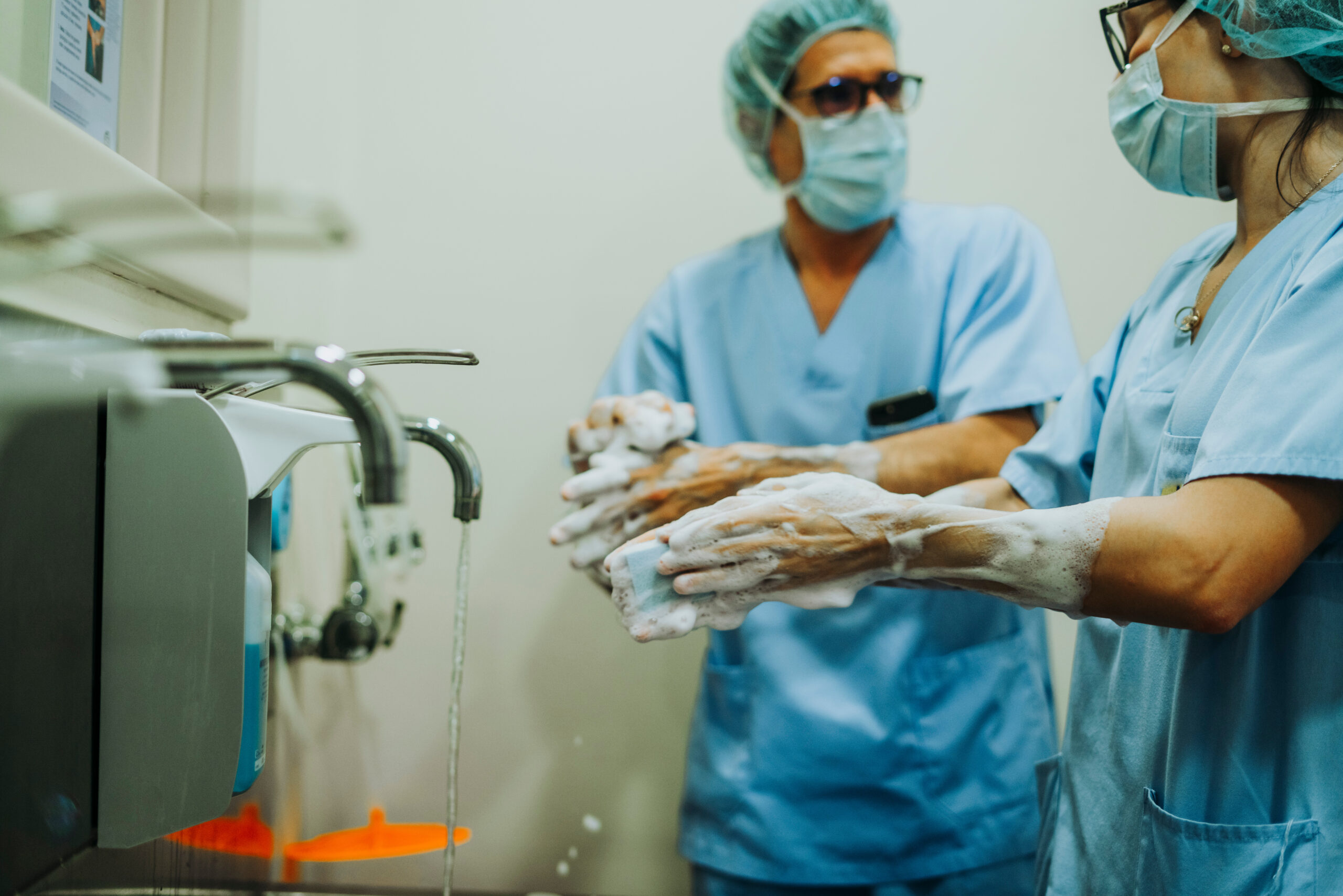
There is evidence to support the importance of good hand hygiene, sterile gloves and appropriate surgical site disinfection in reducing SSIs; however, limited evidence exists surrounding surgical attire. The rationale of theatre attire is to provide a barrier that protects the patient from microorganisms which are shed into the environment from the skin and hair of theatre personnel. Theatre attire also acts as a barrier to the outside environment from theatre contaminants.
The National Institute for Health and Care Excellence (NICE, 2008) states all theatre staff should wear specific, non-sterile theatre wear in any area where operations take place to contribute to theatre discipline and minimise the risk of SSIs. While there is a lack of significant evidence to support the best choice of clothing for the surgical environment, wearing specific laundered and other non-sterile theatre wear contributes to theatre discipline and may minimise the risk of SSIs.
Surgical technique
Sterile technique refers to the measures taken to prevent infection just before or during the surgical procedure. Sterile technique, therefore, encompasses hand hygiene, surgical hand preparation, use of barriers (gloves and gowns), skin preparation, creation of a sterile field, appropriate antibiotic use and good surgical technique.
It is crucial to minimise the length of surgery, as studies have shown that every hour of surgery approximately doubles the infection rate
One of the biggest factors affecting post-operative infection rate is time, particularly overall anaesthetic time. It is crucial to minimise the length of surgery, as studies have shown that every hour of surgery approximately doubles the infection rate (Brown et al., 1997; Espinel-Rupérez et al., 2019). Prolonged operative time can increase the likelihood of developing SSIs across a broad array of surgical procedures and surgical specialities (Cheng et al., 2017)
Monitoring infection control measures
Education and training are integral to any infection control programme, and every member of the team must be on board for strategies to be successful. Studies have demonstrated decreases in HAIs after the completion of some form of educational or training programme (Lobo et al., 2005). Infection control training should include the basic principles of infection control, evidence-based protocols and an evaluation of staff compliance through surveillance, testing and auditing (Ruis et al., 2016).
Infection control training should include the basic principles of infection control, evidence-based protocols and an evaluation of staff compliance
Clinical audits are a useful tool to check the effectiveness of and adherence to infection control guidelines. The audit can simply be a post-operative surgical wound audit or regular environmental swabs from key areas. An audit can be invaluable for assessing the frequency of post-operative sepsis and will quickly identify infection outbreaks. It will also enable the practice to localise the problem to a specific routine or member of staff, so appropriate measures can be implemented without blame.
Summary
Surgical site infections are one of the most common causes of morbidity in the surgical patient. Therefore, the implementation of exceptional infection control protocols and effective environmental cleaning, patient preparation and theatre practice are imperative in preventing SSIs.
References (click to expand)
Author
Emma Gerrard, DipAVN (SA), DipHE, CVN, BSc (Hons), CVN, RVN, RAMA, qualified in 2005 from Myerscough College, Preston. She is currently a BScVN online tutor and the theatre practice, surgical nursing and emergency and critical care module leader at the College of Animal Welfare. Emma has worked in mixed, small and emergency and critical care practice but worked most recently as a lead and specialist theatre registered veterinary nurse at a not-for-profit veterinary practice. Emma is a companion and farm animal RAMA (SQP), BSAVA committee member and tutor for ONCORE.