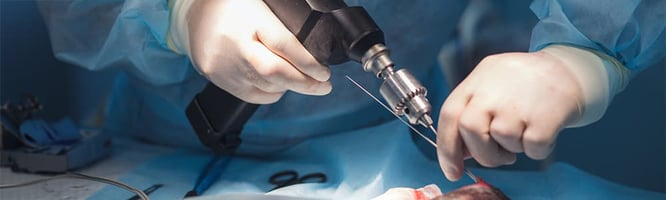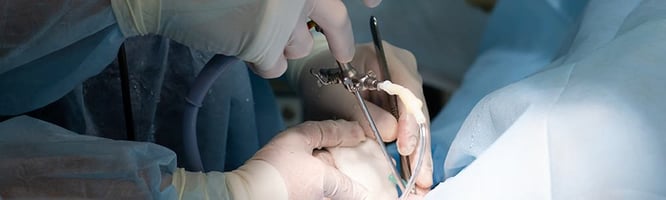
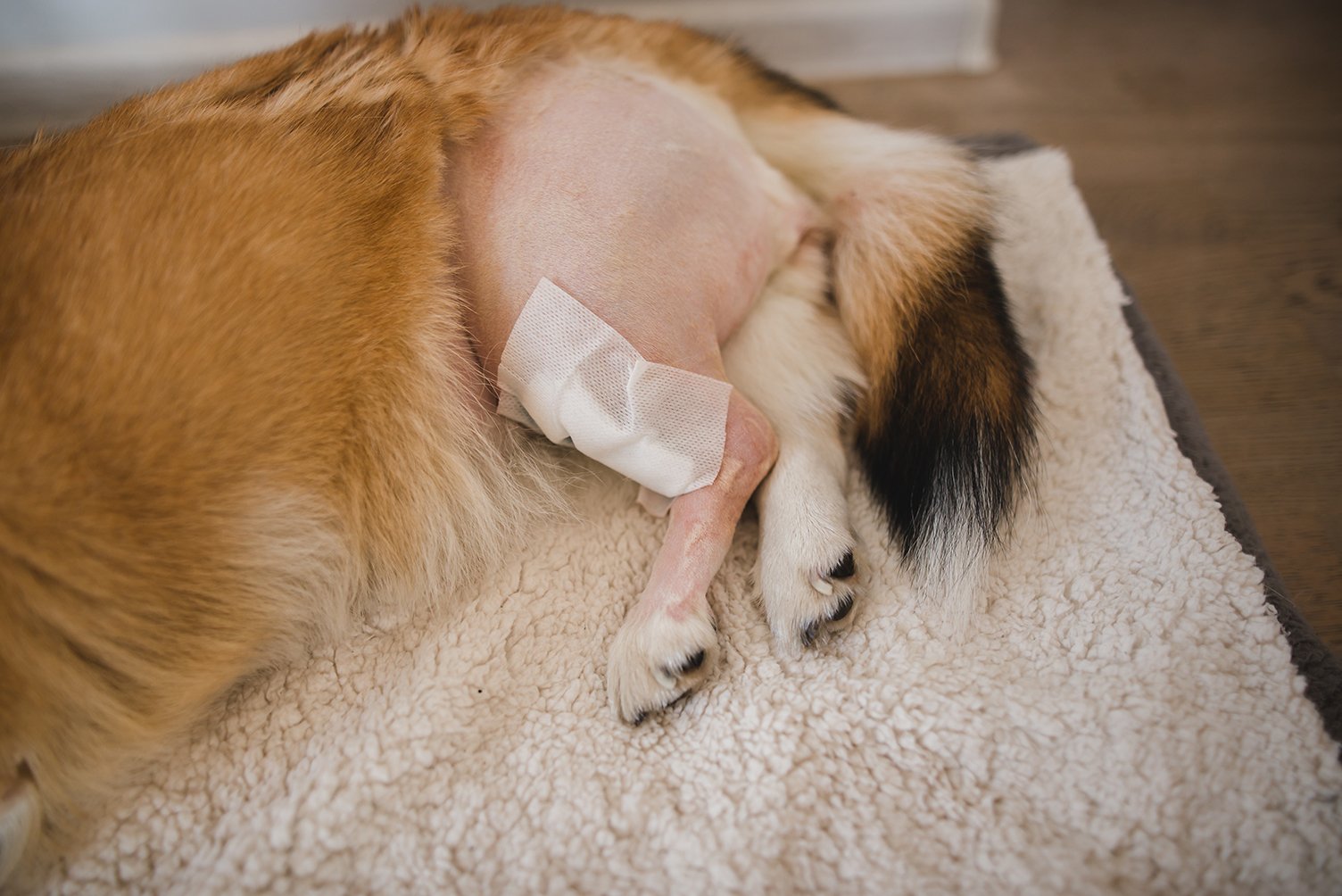
The lateral approach to the femur is one of the most useful and repeatable surgical approaches in small animal orthopaedics. It provides excellent access to the femoral diaphysis (and can be extended proximally or distally), making it a go-to approach for many femoral fracture repairs and corrective procedures.
When to use the lateral approach to the femur
Choose the lateral approach when you need direct access to the femoral shaft (and potentially the proximal or distal femur) for stabilisation or corrective surgery.
Common indications include:
- Femoral diaphyseal fractures requiring reduction and fixation
- Metaphyseal fractures where lateral exposure helps implant placement
- Corrective osteotomies of the femur (e.g., deformity correction)
Situations where you might choose an alternative approach:
- Procedures requiring extensive medial access (depending on target anatomy and implant plan)
- Certain distal femoral articular procedures where a dedicated stifle approach may be more appropriate
- Cases where soft tissue condition laterally is compromised (e.g., trauma wounds)
How to:
The lateral approach uses a muscle-splitting / muscle-elevating plane to reach the femur while protecting major neurovascular structures (which are predominantly medial/caudal). The video below, recorded by Dr Kevin Parsons FRCVS, European and RCVS Specialist in Small Animal Surgery (Orthopaedics), shows the approach in detail: