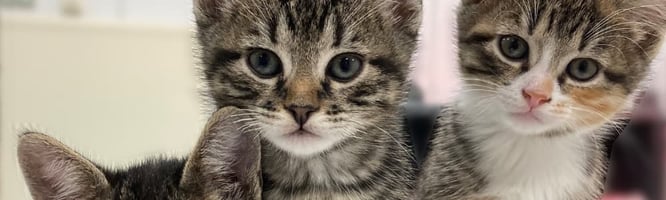

Animal humanisation refers to the attribution of human characteristics to animals, including emotions, intentions, personality traits, appearance, and forms of communication.
According to one of the study’s authors, Associate Professor Evandželina Petukienė, animals today often assume roles that extend far beyond their traditional functions. “Previously, animals fulfilled functions related to protection, hunting, or status, but today pets often take on the role of a child,” she says. The study shows that as many as 66.7 percent of surveyed pet owners refer to their animals as their children. Similar trends have been observed internationally.
Petukienė notes that changing attitudes toward animals are evident in everyday practice. “Having worked with dog owners for many years through volunteering in animal shelters, participating in dog shows, and advising on dog care and nutrition, I can clearly see how people’s attitudes toward animals are changing. There is growing awareness when choosing a pet, and people increasingly recognise that an animal represents a significant responsibility and should be cared for as a true family member. For some, the decision to bring an animal into the household is considered just as carefully as the decision to have a child,” she explains. However, Petukienė emphasises that calling a dog one’s child or allowing it to sleep in the bed does not mean the owner fails to recognise the animal’s nature. “Problems arise only when a dog is raised as a child, as this can negatively affect its behaviour,” she notes.
The study on animal humanisation in Lithuania was conducted by Asta Mačiunskienė, a master’s student at Šiauliai Academy. Data analysis was carried out by lecturer Sigitas Balčiūnas, and the research was supervised by Associate Professor Petukienė. A total of 571 respondents participated in the survey, with the majority being dog owners.
More than 90 per cent of respondents agreed with statements such as “My dog or cat is a true family member” and “I have a strong emotional bond with my pet.” Most participants also believed that no one could care for their animal as well as they could themselves and frequently referred to their pet as a child.
The majority reported that they do not spare money when it comes to pet food and choose the best available options. 64 percent agreed that a pet should be buried almost like a close relative, while 43 percent stated that they care more about their pet’s health than their own. 40 percent said they always celebrate their pet’s birthday and give gifts on special occasions.
According to Petukienė, the level of animal humanisation does not depend on education, income, or place of residence. However, women tend to humanise animals more than men. She notes that women form stronger emotional bonds with animals, are more likely to celebrate pets’ birthdays, give gifts, and want items associated with their animals. Women are also more likely to believe that a pet should be buried like a human when it dies.
The study also found that people who live alone tend to humanise animals slightly more. They are more likely to form strong emotional bonds with their pets and to believe that no one else could care for them better, which may contribute to stronger separation anxiety when they have to leave their animals behind.
Younger respondents, particularly those aged 19 to 25, were the most likely to attribute human qualities to animals. Many in this age group consider their pets family members, form strong emotional bonds, refer to them as children, and believe that pets should be buried like humans.
Petukienė notes that the results were somewhat unexpected. “I assumed that older people would humanise animals more, but the opposite turned out to be true. This may be related to the growing child-free trend among younger generations,” she says.