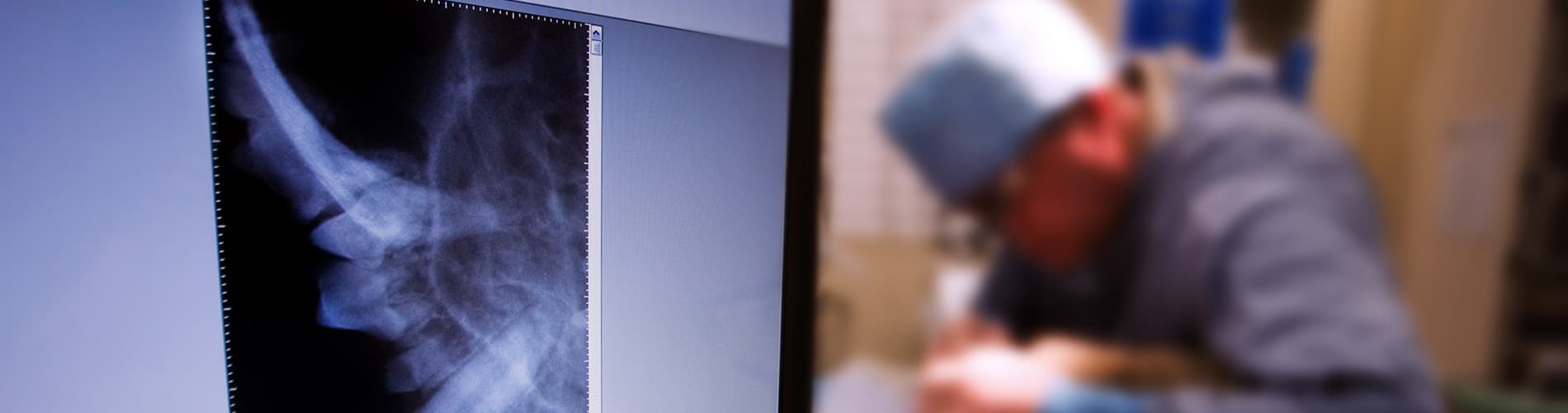
Elevate your small animal dentistry skills with a case-based approach to diagnosis and management
Diagnosing and managing dental and oral diseases represent a significant component of small animal practice. This Postgraduate Certificate (PgC) programme will provide a thorough, informed, case-based approach to such cases. Through lectures, case discussions, and practical sessions, you will learn how to approach the dog, cat, and exotic patient presenting with the various manifestations of oral pathology logically and scientifically.
The modules will assist you in developing your knowledge of small animal dentistry and oral surgery and help you apply in conjunction with diagnostic aids to your everyday dentistry cases.
Hear what our delegates have to say
Don’t just take our word for it - our delegate feedback speaks for itself.
Garrick Ponte
BVSc GPCert(SAM) MRCVS
The teaching at Improve is excellent and I have been able to take what I have learnt back to use in practice. It’s not just the lectures themselves but the practical work we did straight afterwards which drives home everything, which is why Impro … Read more
Colin Dickson
BVMS CertAVP MRCVS
Having previously completed a postgraduate surgery certificate with another provider, I was confident in my knowledge and understanding of the theory but felt underprepared from a practical perspective. I was initially hesitant to register for another … Read more
Key features of this programme
A subscription to Harper Adam's online e-library providing access to 1,000s of scientific articles and abstracts
Access to our world-leading online learning management platform - providing access to course notes, discussion forums and other study resources, including surgical videos and webinars
A dedicated Programme Coordinator will support every individual during their programme to ensure a rewarding and successful learning journey
Places on the programme are limited to ensure the best possible learning experience
State-of-the-art iM3 dentistry lab and X-ray suite
Fully equipped for comprehensive dental procedures
A subscription to Harper Adam's online e-library providing access to 1,000s of scientific articles and abstracts
Access to our world-leading online learning management platform - providing access to course notes, discussion forums and other study resources, including surgical videos and webinars
A dedicated Programme Coordinator will support every individual during their programme to ensure a rewarding and successful learning journey
Places on the programme are limited to ensure the best possible learning experience
State-of-the-art iM3 dentistry lab and X-ray suite
Fully equipped for comprehensive dental procedures
Programme details
Module Summary
01 - Oral Examination
By the end of this module, delegates should be able to:
- Describe the sequence of events in dental embryology and tooth eruption
- Recognise normal oral and dental anatomy and its variations
- Appreciate normal occlusion in the dog and cat and identify the different classes of malocclusions
- Use correct dental terminology and nomenclature
- Identify and describe the use of dental diagnostic hand instruments
- Perform a detailed oral examination and comprehensively record data on a dental chart
02 - Anaesthesia and Analgesia
By the end of this module, delegates should be able to:
- Provide a balanced approach to anaesthesia and analgesia in dental and oral surgical cases
- Discuss anaesthetic monitoring equipment
- Define commonly encountered anaesthetic complications in dental and oral surgical procedures and discuss ways to minimise such complications
- Summarise the advantages and disadvantages of local anaesthetic nerve blocks in the dog and cat
- Learn how to perform local anaesthetic nerve blocks in the dog and cat
03 - Diagnostic Imaging Theory
By the end of this module, candidates should be able to:
- Understand the principles of radiology – material, methods and safety considerations
- Describe the techniques and equipment required for intraoral dental radiography in the dog and cat
- Be able to explain bisecting angle and parallel techniques
- Appreciate the indications for and limitations of skull radiography
- Identify normal dental radiographic anatomy and be familiar with common variations
- Discuss the indications for advanced diagnostic imaging techniques, such as CT and MRI
04 - Diagnostic Imaging Practical
By the end of this module, candidates should be able to
- Confidently use the equipment required for dental radiography
- Perform the techniques required to acquire diagnostic intraoral radiographic images in the dog and cat
- Be able to demonstrate bisecting angle and parallel techniques
- Interpret dental and skull radiographic images and recognise commonly encountered pathology
This module includes a practical film reading session.
05 - Oral and Dental Disease
By the end of this module, delegates should be able to:
- Recognise and describe developmental and congenital abnormalities of the teeth and oral cavity
- Review the commonly encountered acquired oral and dental conditions of the dog and cat including feline gingivostomatitis
- Describe the potential diagnostic pathways for these conditions
- Analyse the advantages and disadvantages of the various treatment options for these conditions
- Evaluate specific case material (photographs and radiographs) in order to discuss potential diagnoses and treatment options
This module includes case discussion including evaluation of photographs and practical film reading.
06 - Periodontology
By the end of this module, delegates should be able to:
- Describe the aetiopathogenesis and pathobiological forms of periodontal disease in the dog and cat
- Discuss the assessment of periodontal health using radiography, probing and charting
- List the potential hazards associated with periodontal therapy (both to operator and patient)
- Summarise the evidence-base surrounding potential homecare options
- Identify ideal cases which could be referred for periodontal surgery, and briefly explain the techniques involved
07 - Oral Surgery I
By the end of this module, delegates should be able to:
- Describe wound healing in the oral cavity, including factors which affect it.
- Outline the causes of cleft palate and oronasal fistulae in the dog and cat.
- Identify instruments commonly used in oral surgical procedures (including dental extractions)
- Summarise the advantages and disadvantages of techniques for cleft palate and oronasal fistula repair in the dog and cat.
- Summarise extraction complications and their avoidance.
- Evaluate the invasive and non-invasive treatment options for jaw fracture repair and symphyseal separation in the dog and cat.
08 - Oral Surgery I Practical Techniques
By the end of this module delegates should be able to:
- Describe and perform local anaesthetic nerve blocks in the dog and cat
- Assess periodontal health via radiography, probing and charting
- Demonstrate thorough periodontal therapy using scaling, closed sub-gingival debridement and polishing techniques
- Perform atraumatic tooth extractions using closed and open surgical techniques
- Repair cleft palate defects and oronasal fistulae
09 - Oral Surgery II
By the end of this module, delegates should be able to:
- Discuss the classes of dentoalveolar trauma and analyse treatment options
- Describe the biomechanics of jaw fracture repair
- Evaluate the invasive and non-invasive treatment options for jaw fracture repair and symphyseal separation in the dog and cat
- Diagnose and describe management options for traumatic temporomandibular joint disorders
- Know when to refer cases with complex oral pathology
10 - Oral Surgery II Practical Techniques
By the end of this module delegates should be able to:
- Stabilise a symphyseal separation using wire
- Perform interdental wiring
- Repair mandibular fractures
- Approach the temporomandibular joint surgically
11 - Oncology
By the end of this module delegates should be able to:
- Explain the spectrum of oral masses including inflammatory, hyperplastic, cystic, benign neoplastic and malignant, using current terminology
- Describe the clinical and radiographic appearance of odontogenic tumours in the dog and cat
- Define the commonly encountered non-odontogenic tumours of the dog and cat, describe clinical and radiographic appearances, and evaluate treatment options
- Discuss with clients more advanced oral surgical techniques such as unilateral and bilateral rostral mandibulectomy and rostral maxillectomy
12 - Exotic Animal Dentistry
By the end of this module, delegates should be able to:
- Recognise normal dental and oral anatomy in rabbits and guinea pigs
- Identify the factors which adversely affect dental and oral health in these species
- Evaluate the treatment options for overgrown incisors, molars and traumatic injuries to teeth
- Discuss treatment options for abscesses and caries
- Provide advice on the prevention of dental disease in these species and ethical considerations for the treatment of advanced disease in these species
This module includes a practical session
13 - Advanced Veterinary Dental Techniques I
By the end of these modules, delegates should be able to:
- Describe the pathophysiology of the pulp-dentine complex and its response to trauma
- Identify disorders which may be referred for endodontic therapies (root canal therapy, vital pulp therapy)
- Appreciate the steps involved in performing root canal therapy and vital pulp therapy, and discuss success rates and complications
- Explain the classes of malocclusion seen in the dog and cat, and summarise the treatment options
- Consider the ethical considerations of performing orthodontic treatments
- Discuss the basic principles and techniques of orthodontic tooth movement
- Demonstrate knowledge of the indications for and process of performing crown therapy (prosthodontics) in the dog and cat
- Summarise restorative techniques, materials and indications
14 - Advanced Veterinary Dental Techniques II
This is the second of two days allocated to advanced veterinary dental techniques. Full learning objectives can be found under Module 13.
Practical Element
Qualifications
General Practitioner Certificate (GPCert)

This course is accredited by ISVPS and allows you to achieve a General Practitioner Certificate
Improve Veterinary Education provides the Dentistry and Oral Surgery programme in collaboration with the International School of Veterinary Postgraduate Studies (ISVPS) and Harper Adams University.
Complete the one-year programme (all modules) and achieve the General Practitioner Certificate (GPCert) by passing the required assessments with the International School of Veterinary Postgraduate Studies (ISVPS).
Continue to the Postgraduate Certificate (PgC) that combines the ISVPS GPCert clinical studies, reflective practice and successful completion of the Advanced Practitioner Module with Harper Adams University. The PgC represents Masters Level 7 within the Quality Assurance Agency’s framework for higher and further education. It provides 60 transferable academic credits. Delegates wishing to complete the Postgraduate Certificate examination must attend all the taught modules (including the practical sessions). These modules can be completed in one year, or delegates can extend the programme over two or three years.
After completing your PgC, you may apply for the RCVS Advanced Practitioner Status. This is subject to meeting all other entry requirements set out by the RCVS in the Applicant Guidance Notes.
The RCVS recognises this PgC as an eligible entry qualification for application to Advanced Practitioner status.
Speakers




Pricing
£10,595.00
£11,199.00Payment & VAT Information
1. Many of our courses come with deferred payment and instalment options. Click “Book Now” to see what’s available for this course.
2. All prices will be displayed exclusive of local sales tax.
3. For corporate-paid registrations, the associated corporate discount will apply to the regular course price and cannot be combined with Early Price or other promotions.
Payment Terms & Conditions
Registration Information
100% Satisfaction
We're completely confident in the quality of our training and CPD. So much so that if you're not 100% satisfied with your certificate course, we'll give you a 100% refund. Just get in touch with us within 30 days of your start date and we'll sort the rest. T's and C's apply.
Find out more
FAQs
Practical Sessions
Where are practical CPD courses or face-to-face modules held?
What will the timings be for face-to-face certificate modules and practical CPD sessions? How will my day be structured?
Where do the cadavers come from for the practical CPD and surgical modules/courses?
What should I wear to a practical CPD course/module?
I will be travelling from overseas, do I need a Visa?
Will the dogs used for practical CPD courses be sedated?
Will the dogs used for scanning have any abnormalities?
Are the dogs used for ultrasound CPD clipped?
Are cats used for any of the ultrasound courses?
Postgraduate Certificates (PgCs)
What’s changing with Royal College of Veterinary Surgeons (RCVS) Advanced Practitioner status?
What is a Postgraduate Certificate (PgC)?
Am I eligible for the PgC programme?
How do I enrol on the PgC programme?
I have previously achieved a GPCert. Can I still upgrade to a PgC?
Is the PgC equivalent to the RCVS CertAVP, BSAVA PGCert, and other university-awarded veterinary postgraduate certificates?
How are Improve’s PgCs different from other providers?
How will I be assessed for the PgC?
What does the PgC fee include?
What’s not included in the PgC fee? Do I need to budget for further costs?
Payments & Finance
What payment methods do you accept?
Do you offer any flexible payment plans?
What payment methods can I use for setting up a direct debit?
Do you issue separate invoices for each instalment?
Why was my Direct Debit payment not charged on the day that is established in my payment plan?
Why couldn’t I make payment during check-out?
Where can I find the bank details for the bank/wire transfer?
What happens if my circumstances change and I need to cancel my order?
When is payment for my veterinary CPD course due?
How much do the veterinary CPD courses and certificate programmes cost?
My course includes assessments with HAU, how do I make payment for these?
My CPD course includes assessments with ISVPS, how do I make payment for these?
Can I pay by Direct Debit?
General Practitioner Certificates (GPCerts)
What is the criteria for enrolling in a General Practitioner Certificate programme?
What is the difference between a GPCert and a PgC?
Can I use this veterinary certificate programme towards my veterinary CPD hours?
How long does a General Practitioner Certificate (GPCert) take to achieve?
I want to register for a veterinary certificate course but I may be away for some of the modules. Does this mean I will miss out?
How long do I have to finish the modules for my GPCert?
What resources will be available to support me through the certificate programme?
How long do I have access to the course material for?
How will I be assessed for the GPCert?
What happens if I am not eligible to sit the assessments and/or exam with my cohort?
What does the General Practitioner Certificate programme fee include?
What’s not included in the certificate programme fee? Do I need to budget for further costs?
Will my veterinary postgraduate qualification be recognised in other countries?
Can I take a postgraduate certificate if coming from a non-European country? How do face-to-face modules work?
What resources will be available to support me through the PgC?
Where are the taught programmes held?
Are Improve’s Postgraduate Certificates academically equivalent to the RCVS CertAVP and other postgraduate certificates?
Over what time period can I take the taught modules?
Our Clinical Excellence Centre
Discover the new Improve Veterinary Education Clinical Excellence Centre featuring two surgical wet-lab training theatres and a radiology suite.
Find out more