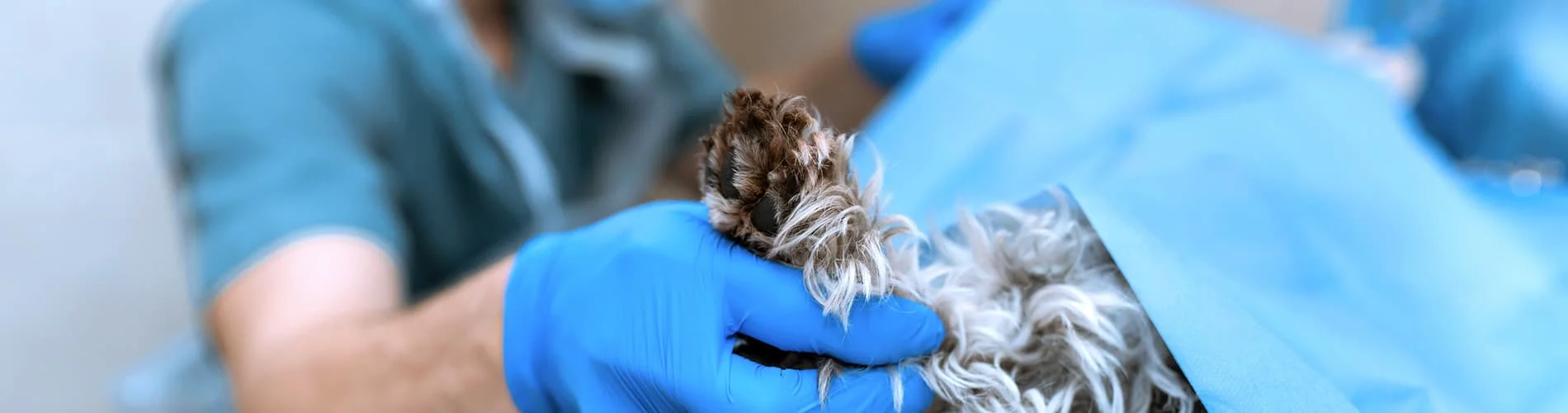
The Most Practical Small Animal Soft Tissue Surgery Certificate Programme
The new General Practitioner Certificate (GPCert) in Small Animal Soft Tissue Surgery goes beyond technique - it's about developing the mindset, communication, and critical decision-making skills required of today's veterinary surgeons. In an industry where soft tissue surgery is as much about problem-solving and decision-making as it is about sutures and scalpels, this programme prepares you for the full scope of clinical reality. Whether you're navigating high-pressure situations, managing client expectations, or choosing the right approach for each patient, you'll be trained to act with clarity, confidence, and compassion.
And now it is accredited for RCVS Advanced Practitioner status, the programme opens up a clear and practical pathway for developing advanced surgical skills and confidence as you grow.
Unlike traditional courses that focus solely on surgical content, our approach to small animal soft tissue surgery is deeply immersive and practical. You'll train in realistic surgical scenarios and simulated environments, guided by OSATS (Objective Structured Assessment of Technical Skills) style assessments that focus on skill execution - such as instrument handling, tissue respect, and technical execution of procedures. Real-time feedback will help you grow with each procedure, while the practical sessions on cadavers and simulators will deepen your confidence in theatre.
If eligible, you'll also graduate with a globally recognised GPCert Advanced Practitioner Route in Small Animal Soft Tissue Surgery from ISVPS, and a pathway to a PgC.
NEW Optional add-on to the Soft Tissue Surgery Programme and your pathway to the GPCert (Orthopaedics)
Take your clinical capability to the next level with our Mini Modular in Orthopaedics, designed for vets who want to confidently diagnose, manage, and treat orthopaedic cases in everyday practice. This structured pathway blends three in-depth online modules with three hands-on practical training days, giving you an ideal balance of theoretical knowledge, clinical reasoning, and real-world surgical application. Whether your goal is to expand your surgical caseload, enhance your diagnostic confidence, or progress toward the GPCert Small Animal Orthopaedics, this programme provides the skills and experience to get you there.
Across the online modules, you'll build a strong foundation in orthopaedic examination, imaging, trauma assessment, fracture biology, fixation principles, and evidence-based treatment planning. These concepts are then brought to life during intensive practical sessions, where you will perform full orthopaedic and neurological exams, arthrocentesis, fracture classification, screw and wire techniques, plate and intramedullary pin fixation, plate-rod constructs, tension band repairs, bone graft harvesting, coaptation, pelvic approaches, and post-operative radiograph evaluation.
Together, this blended format delivers a comprehensive, practice-ready route to advanced orthopaedic competence and seamless progression onto the full GPCert Orthopaedic programme. See more information below.
Hear what our delegates have to say
Don’t just take our word for it - our delegate feedback speaks for itself.

Georgia Freeman-Mills
MRCVS
I’m really enjoying the programme. The lectures and materials have been engaging, and it’s been great to get back into studying. I’ve especially enjoyed the recent module on surgical oncology. Read more
Key features of this programme
Blended Programme - A Balance of Interactive Online and Practical Modules
Structured and engaging online learning, with 10 hands-on practical modules in our state-of-the-art wet-lab facilities
OSATS-Based Practical Assessment
Structured evaluations using OSATS rubrics during cadaver and simulator practicals, focusing on instrument handling, tissue respect, and technical execution of procedures.
Integrated Interdisciplinary Learning
Engage with specialists in internal medicine, diagnostic imaging, and anaesthesia through expert panel-led "Ask it now solve it together sessions", co-management scenarios, and clinical simulations.
Personalised Expert Mentorship
Advice from your mentor, continuous guidance from your programme coordinator, and a safe space to ask anything, anytime and anonymously.
Decision-making, Communication & Resilience Training
Build essential non-technical skills including risk communication, emotional regulation, error management, and operating room leadership.
Advanced AI Medical Simulator
Practise client conversations in complex surgical scenarios with interactive roleplay, instant feedback, and varied client profiles to improve clarity and empathy under pressure.
Structured Learning That Builds Real Confidence
Each module contains online content and resources that provide the theory and foundations to the practical block training that follows - helping you retain and apply your knowledge.
Expert-Led Training
Gain insights from leading veterinary specialists and connect with them directly during hands-on sessions at our state-of-the-art training centre.
Engaging, Multi-Format Learning
Enjoy interactive presentations, notes, quizzes, surgical videos, and real case-based discussions.
Collaborative Community
Join a professional network of veterinary surgeons sharing cases, challenges, and experiences via our dedicated virtual learning environment and in-person modules.
Unrivalled Support
You'll be supported throughout by a dedicated Programme Coordinator and access experts and specialists in person as they support your learning journey.
Superior Learning Resources
In addition to our online interactive case materials an intelligent living atlas, access to the RCVS Knowledge Library.
Blended Programme - A Balance of Interactive Online and Practical Modules
Structured and engaging online learning, with 10 hands-on practical modules in our state-of-the-art wet-lab facilitiesOSATS-Based Practical Assessment
Structured evaluations using OSATS rubrics during cadaver and simulator practicals, focusing on instrument handling, tissue respect, and technical execution of procedures.Integrated Interdisciplinary Learning
Engage with specialists in internal medicine, diagnostic imaging, and anaesthesia through expert panel-led "Ask it now solve it together sessions", co-management scenarios, and clinical simulations.Personalised Expert Mentorship
Advice from your mentor, continuous guidance from your programme coordinator, and a safe space to ask anything, anytime and anonymously.Decision-making, Communication & Resilience Training
Build essential non-technical skills including risk communication, emotional regulation, error management, and operating room leadership.Advanced AI Medical Simulator
Practise client conversations in complex surgical scenarios with interactive roleplay, instant feedback, and varied client profiles to improve clarity and empathy under pressure.Structured Learning That Builds Real Confidence
Each module contains online content and resources that provide the theory and foundations to the practical block training that follows - helping you retain and apply your knowledge.Expert-Led Training
Gain insights from leading veterinary specialists and connect with them directly during hands-on sessions at our state-of-the-art training centre.Engaging, Multi-Format Learning
Enjoy interactive presentations, notes, quizzes, surgical videos, and real case-based discussions.Collaborative Community
Join a professional network of veterinary surgeons sharing cases, challenges, and experiences via our dedicated virtual learning environment and in-person modules.Unrivalled Support
You'll be supported throughout by a dedicated Programme Coordinator and access experts and specialists in person as they support your learning journey.Superior Learning Resources
In addition to our online interactive case materials an intelligent living atlas, access to the RCVS Knowledge Library.Programme details
Module Summary
01 - Surgical foundations – asepsis, wound management, and technical essentials
• Explain wound healing, wound classification and factors affecting repair, and manage acute, chronic and infected wounds.
• Apply aseptic technique and Halsted’s principles; select dressings, drains, sutures and surgical instruments appropriately.
• Plan anaesthesia, analgesia and perioperative pain management, including ASA classification and pain scoring.
• Use surgical safety checklists and non-technical skills including communication, decision-making and leadership.
02 - Reconstructive surgery – principles and techniques of skin closure
• Explain skin anatomy and vascular supply and select primary, secondary or delayed closure.
• Apply tension-reducing techniques and plan local advancement/transposition flaps, axial pattern flaps and full-thickness skin grafts.
• Manage surgical site infection and delayed or abnormal healing, including pseudo-healing in cats.
• Plan perioperative care and reconstruction around sensitive structures, including when referral is appropriate.
03 - Surgical oncology – principles, planning, and decision-making
• Apply oncologic surgery principles including margins, tissue planes and vascular control.
• Select appropriate FNA, incisional or excisional biopsy and stage cutaneous and subcutaneous tumours.
• Plan removal and closure of subcutaneous masses and manage mammary tumours in context.
• Use perioperative checklists, closed-loop communication and other non-technical surgical skills.
04 - ENT surgery – approaches to the ear, nose, and throat
• Investigate chronic otitis externa using otoscopy, imaging and sampling, and manage common aural disease.
• Explain indications, techniques and complications for lateral wall resection, vertical canal ablation, TECA, pinnectomy and tonsillectomy.
• Assess oropharyngeal injuries and nasopharyngeal polyps and incorporate imaging, nerve blocks and perioperative care into ENT surgical planning.
• Recognise complex cases requiring referral.
05 - Neck surgery – anatomy, access, and advanced airway management
• Apply canine and feline neck anatomy to diagnostic and surgical planning for cervical masses.
• Assess and manage feline hyperthyroidism and canine thyroid tumours, including thyroidectomy and referral decisions.
• Diagnose and surgically manage salivary mucoceles.
• Explain oesophagostomy tube placement and temporary tracheostomy, including aftercare and complications.
06 - The art of the surgical consultation - Bonus Module
• Communicate surgical plans, prognosis, consent, complications and unexpected outcomes using clear language, active listening and emotional intelligence.
• Recognise compassion fatigue and surgical stress and use strategies to support wellbeing and decision-making.
• Practise high-stakes surgical communication and reflect on psychological and ethical aspects of surgical care.
07 - Surgical Practical Block 1 – Core techniques and surgical confidence (Day 1)
By the end of Day 1, the learner will be able to:
- Perform secure hand-ties using one- and two-handed techniques (square, surgeon’s, slip knots).
- Execute the “finger trap” suture effectively for securing tubes and drains.
- Select appropriate surgical instruments for skin suturing and demonstrate correct handling and needle control.
- Apply gentle tissue manipulation principles during suturing to minimise trauma and ensure optimal healing.
- Close large skin wounds using subdermal flap techniques with proper respect for tissue planes and tension lines.
- Perform tension-relieving techniques including undermining, walking sutures, and tension incisions.
- Plan and verbally justify reconstructive strategies using advancement and transposition flaps.
- Demonstrate technical competence in creating and securing local skin flaps.
- Place and secure a Penrose drain correctly, ensuring optimal placement for drainage.
- Identify and apply suitable dressings and bandaging strategies, including tie-over dressings for complex wound locations.
- Perform advanced knot techniques such as sliding knots and the Modified Miller’s knot, ensuring security and precision in deep cavities.
08 - Surgical Practical Block 1 – ENT surgical techniques (Day 2)
By the end of Day 3, the learner will be able to:
- Perform a lateral wall resection and vertical canal ablation with respect for neurovascular structures and surgical planes.
- Execute a pinnectomy and tonsillectomy with attention to haemostasis and postoperative considerations.
- Carry out a soft palate incision and repair procedure, recognising tissue layers and suture techniques required.
- Administer regional nerve blocks (auriculotemporal, greater auricular) accurately to enhance analgesia for ENT procedures.
- Interpret radiographic and CT imaging related to otitis, aural masses, and oropharyngeal trauma.
09 - Surgical Practical Block 1 –Tumour surgery and non-technical skills (Day 3)
By the end of Day 2, the learner will be able to:
- Perform a regional mastectomy and mammary strip procedure with appropriate vascular control and anatomical awareness.
- Identify and remove subcutaneous masses with oncologic margins and plan for effective closure.
- Recognise and articulate key non-technical skills (situational awareness, decision-making, leadership, communication) as critical to surgical success.
- Apply principles of contextualised care in evaluating and managing mammary tumours with varying clinical presentations.
- Utilise perioperative checklists and closed-loop communication to enhance surgical team safety and reduce errors.
10 - Upper and lower gastrointestinal surgery – exploration, intervention, and complication management
• Use radiography, ultrasound and CT to assess gastrointestinal abnormalities including obstruction, intussusception and neoplasia.
• Plan and perform exploratory laparotomy, gastrotomy, partial gastrectomy, gastropexy, enterotomy, intestinal biopsy and enterectomy, including augmentation techniques.
• Manage intussusception, mesenteric lymph node biopsy and postoperative complications including peritonitis, ileus and pancreatitis.
• Plan perioperative care, interpret blood gases and electrolytes, select closure materials and recognise cases requiring referral.
11 - Emergency, parenchymal organ surgery and hernia repair
• Triage and plan surgery for acute abdominal emergencies.
• Plan splenectomy and surgery of the liver, kidney, adrenal gland and pancreas, using diagnostic imaging to guide operative planning.
• Anticipate haemorrhage, coagulopathy, pancreatitis, peritonitis and other complications.
• Recognise hernia or parenchymal-organ cases requiring referral.
12 - Surgical Practical Block 2 – Cervical surgery and emergency access (Day 1)
By the end of Day 1, the learner will be able to:
- Perform oesophagostomy tube placement and formulate postoperative nutritional support plans.
- Execute the emergency placement of a temporary tracheotomy tube and describe key aftercare protocols.
- Conduct a midline neck exploration, identifying normal anatomy and recognising common abnormalities.
- Perform mandibular/sublingual sialadenectomy for the treatment of salivary mucoceles, selecting the appropriate surgical approach.
- Perform thyroidectomy with attention to gland preservation, haemostasis, and postoperative monitoring.
- Safely isolate and loop a carotid artery, demonstrating fine dissection and vascular handling techniques.
13 - Surgical Practical Block 2 – Gastrointestinal surgery and abdominal exploration (Day 2)
By the end of Day 2, the learner will be able to:
- Perform a complete exploratory laparotomy and systematically evaluate the pancreas, liver, adrenal glands, GI and urinary tracts.
- Conduct a gastrotomy and a pyloric incisional gastropexy; perform a partial gastrectomy via invagination.
- Excise and biopsy mesenteric lymph nodes safely, with appropriate anatomical orientation.
- Close the abdominal wall using correct suture layers and material selection.
- Perform enterotomy and hand-sutured enterectomy procedures, applying serosal patching and other augmentation techniques where needed.
- Recognise technical errors in intestinal surgery and respond appropriately to demonstrator feedback during the session.
- Observe and evaluate stapled enterectomy technique.
- Perform intestinal biopsy and interpret its role in diagnostic and surgical planning.
14 - Surgical Practical Block 2 –Solid organ surgery and hernia repair (Day 3)
By the end of Day 3, the learner will be able to:
- Recall the splenic vascular anatomy and perform both hilar and major vessel ligation splenectomy techniques.
- Execute liver biopsy using multiple methods (e.g. guillotine, punch, wedge) with minimal tissue trauma.
- Perform diaphragmatic hernia repair, including air evacuation from the thoracic cavity and closure of the defect.
- Identify inguinal anatomy and perform a simulated inguinal hernia repair.
- Perform a tenotomised internal obturator flap for perineal hernia repair and justify flap selection.
- Carry out an anal sacculectomy, recognising anatomical landmarks and avoiding key complications.
15 - Surgical Practical Block 2 – Comprehensive surgical technique consolidation (Day 4)
By the end of Day 4, the learner will be able to:
- Consolidate and refine technical execution of procedures covered in Practical Blocks 1 and 2, including: from hand-ties (basic and advanced) through to a range of the more clinically relevant soft tissue surgicla procedures covered to date., skin closures with subdermal flaps, tension-relieving techniques, Penrose drain placement, regional mastectomy, subcutaneous mass excision, lateral wall resection, vertical canal ablation, pinnectomy, tonsillectomy, soft palate incision and repair, oesophagostomy tube placement, emergency tracheotomy, thyroidectomy, neck exploration, salivary gland removal, full exploratory laparotomy, gastrotomy, enterotomy, enterectomy, mesenteric lymph node biopsy, splenectomy, liver biopsy, diaphragmatic hernia repair, inguinal hernia repair, perineal hernia repair, and anal sacculectomy.
- Integrate flap planning, instrument selection, and gentle tissue handling principles into more advanced surgical contexts.
- Demonstrate improved fluency in operative flow, efficient instrument use, and anatomical respect across all rehearsed procedures.
- Repeat complete surgical procedures with minimal supervision, actively correcting prior errors using demonstrator feedback.
- Maintain consistent aseptic technique, surgical rhythm, and intraoperative decision-making throughout.
- Reflect on technical progress and set personal goals for continued improvement.
16 - BOAS, upper airway and thoracic surgery - restoring function in brachycephalic and airway-compromised patients
• Explain BOAS pathophysiology and assess the upper airway under anaesthesia.
• Plan surgical correction of stenotic nares and recognise cases requiring referral.
• Explain indications and approaches for common thoracic procedures, including lung lobectomy or biopsy, pericardiectomy, PDA or vascular procedures, thoracic duct ligation, thymectomy, sternotomy and chest wall reconstruction.
• Manage perioperative risks and complications of thoracic surgery.
17 - Urogenital surgery – techniques for the urinary and reproductive systems
• Diagnose and surgically manage urolithiasis and urinary obstruction, including cystotomy, urethrotomy, perineal and scrotal urethrostomy.
• Use imaging and urinalysis to plan surgery for obstruction or trauma and manage ectopic ureters and urinary incontinence.
• Perform common reproductive procedures including ovariohysterectomy, castration and cryptorchid surgery, and manage reproductive neoplasia.
• Plan perioperative care, recognise complications and identify cases requiring referral.
18 - Surgical Practical Block 3 – Upper airway, thoracic and urogenital foundations (Day 1)
By the end of Day 1, the learner will be able to:
- Perform a surgical tracheostomy and describe appropriate postoperative management and complication prevention.
- Execute a frontal sinusotomy (sinus approach) and identify key anatomical landmarks and surgical risks.
- Perform wedge rhinoplasty for stenotic nares, demonstrating tissue planning and cosmetic alignment.
- Place thoracostomy tubes using both trocar and Seldinger techniques, and explain indications and complications.
- Conduct an ovariectomy or ovariohysterectomy safely, selecting the appropriate technique based on patient factors.
- Perform cystotomy for removal of uroliths, with appropriate closure and leak testing.
- Perform urethral catheterisation in male and female dogs, understanding anatomical variations and techniques to minimise trauma.
19 - Surgical Practical Block 3 – Advanced urogenital surgery and abdominal drains (Day 2)
By the end of Day 2, the learner will be able to:
- Perform nephrectomy, including vascular ligation and ureteral transection, and discuss indications and contraindications.
- Conduct an episiotomy with attention to reproductive tract and perineal anatomy.
- Execute a preputial advancement procedure to address preputial displacement or injury.
- Perform prescrotal urethrotomy in the male dog and describe closure and catheterisation techniques.
- Place a cystostomy tube and plan for long-term urinary diversion and care.
- Insert abdominal drains using open or closed methods and justify their use in specific surgical contexts.
- Surgically approach the prostate gland and discuss common indications such as abscesses, cysts, or neoplasia.
20 - Surgical Practical Block 3 – Feline-focused surgery – precision, adaptation and soft tissue mastery (Day 3)
By the end of Day 3, the learner will be able to:
- Perform thyroidectomy in the cat and describe perioperative considerations including hypocalcaemia prevention.
- Execute feline enucleation and identify differences from the canine approach.
- Manage feline wounds with appropriate closure techniques and considerations for skin fragility.
- Perform enterotomy and enterectomy procedures in the cat, with feline-specific handling and repair strategies.
- Repair diaphragmatic rupture in cats, managing thoracic entry and ensuring secure closure.
- Diagnose and repair prepubic tendon rupture, including reconstruction techniques and postoperative care.
- Recognise and adapt surgical plans based on feline anatomical and physiological differences compared to dogs.
Programme details
Module Summary
01 - Surgical foundations – asepsis, wound management, and technical essentials
• Explain wound healing, wound classification and factors affecting repair, and manage acute, chronic and infected wounds.
• Apply aseptic technique and Halsted’s principles; select dressings, drains, sutures and surgical instruments appropriately.
• Plan anaesthesia, analgesia and perioperative pain management, including ASA classification and pain scoring.
• Use surgical safety checklists and non-technical skills including communication, decision-making and leadership.
02 - Reconstructive surgery – principles and techniques of skin closure
• Explain skin anatomy and vascular supply and select primary, secondary or delayed closure.
• Apply tension-reducing techniques and plan local advancement/transposition flaps, axial pattern flaps and full-thickness skin grafts.
• Manage surgical site infection and delayed or abnormal healing, including pseudo-healing in cats.
• Plan perioperative care and reconstruction around sensitive structures, including when referral is appropriate.
03 - Surgical oncology – principles, planning, and decision-making
• Apply oncologic surgery principles including margins, tissue planes and vascular control.
• Select appropriate FNA, incisional or excisional biopsy and stage cutaneous and subcutaneous tumours.
• Plan removal and closure of subcutaneous masses and manage mammary tumours in context.
• Use perioperative checklists, closed-loop communication and other non-technical surgical skills.
04 - ENT surgery – approaches to the ear, nose, and throat
• Investigate chronic otitis externa using otoscopy, imaging and sampling, and manage common aural disease.
• Explain indications, techniques and complications for lateral wall resection, vertical canal ablation, TECA, pinnectomy and tonsillectomy.
• Assess oropharyngeal injuries and nasopharyngeal polyps and incorporate imaging, nerve blocks and perioperative care into ENT surgical planning.
• Recognise complex cases requiring referral.
05 - Neck surgery – anatomy, access, and advanced airway management
• Apply canine and feline neck anatomy to diagnostic and surgical planning for cervical masses.
• Assess and manage feline hyperthyroidism and canine thyroid tumours, including thyroidectomy and referral decisions.
• Diagnose and surgically manage salivary mucoceles.
• Explain oesophagostomy tube placement and temporary tracheostomy, including aftercare and complications.
06 - Surgical Practical Block 1 – Core techniques and surgical confidence (Day 1)
By the end of Day 1, the learner will be able to:
- Perform secure hand-ties using one- and two-handed techniques (square, surgeon’s, slip knots).
- Execute the “finger trap” suture effectively for securing tubes and drains.
- Select appropriate surgical instruments for skin suturing and demonstrate correct handling and needle control.
- Apply gentle tissue manipulation principles during suturing to minimise trauma and ensure optimal healing.
- Close large skin wounds using subdermal flap techniques with proper respect for tissue planes and tension lines.
- Perform tension-relieving techniques including undermining, walking sutures, and tension incisions.
- Plan and verbally justify reconstructive strategies using advancement and transposition flaps.
- Demonstrate technical competence in creating and securing local skin flaps.
- Place and secure a Penrose drain correctly, ensuring optimal placement for drainage.
- Identify and apply suitable dressings and bandaging strategies, including tie-over dressings for complex wound locations.
- Perform advanced knot techniques such as sliding knots and the Modified Miller’s knot, ensuring security and precision in deep cavities.
07 - Surgical Practical Block 1 – ENT surgical techniques (Day 3)
By the end of Day 3, the learner will be able to:
- Perform a lateral wall resection and vertical canal ablation with respect for neurovascular structures and surgical planes.
- Execute a pinnectomy and tonsillectomy with attention to haemostasis and postoperative considerations.
- Carry out a soft palate incision and repair procedure, recognising tissue layers and suture techniques required.
- Administer regional nerve blocks (auriculotemporal, greater auricular) accurately to enhance analgesia for ENT procedures.
- Interpret radiographic and CT imaging related to otitis, aural masses, and oropharyngeal trauma.
08 - Surgical Practical Block 1 –Tumour surgery and non-technical skills (Day 2)
By the end of Day 2, the learner will be able to:
- Perform a regional mastectomy and mammary strip procedure with appropriate vascular control and anatomical awareness.
- Identify and remove subcutaneous masses with oncologic margins and plan for effective closure.
- Recognise and articulate key non-technical skills (situational awareness, decision-making, leadership, communication) as critical to surgical success.
- Apply principles of contextualised care in evaluating and managing mammary tumours with varying clinical presentations.
- Utilise perioperative checklists and closed-loop communication to enhance surgical team safety and reduce errors.
09 - The art of the surgical consultation - Bonus Module
• Communicate surgical plans, prognosis, consent, complications and unexpected outcomes using clear language, active listening and emotional intelligence.
• Recognise compassion fatigue and surgical stress and use strategies to support wellbeing and decision-making.
• Practise high-stakes surgical communication and reflect on psychological and ethical aspects of surgical care.
10 - Upper and lower gastrointestinal surgery – exploration, intervention, and complication management
• Use radiography, ultrasound and CT to assess gastrointestinal abnormalities including obstruction, intussusception and neoplasia.
• Plan and perform exploratory laparotomy, gastrotomy, partial gastrectomy, gastropexy, enterotomy, intestinal biopsy and enterectomy, including augmentation techniques.
• Manage intussusception, mesenteric lymph node biopsy and postoperative complications including peritonitis, ileus and pancreatitis.
• Plan perioperative care, interpret blood gases and electrolytes, select closure materials and recognise cases requiring referral.
11 - Emergency, parenchymal organ surgery and hernia repair
• Triage and plan surgery for acute abdominal emergencies.
• Plan splenectomy and surgery of the liver, kidney, adrenal gland and pancreas, using diagnostic imaging to guide operative planning.
• Anticipate haemorrhage, coagulopathy, pancreatitis, peritonitis and other complications.
• Recognise hernia or parenchymal-organ cases requiring referral.
12 - Surgical Practical Block 2 – Cervical surgery and emergency access (Day 1)
By the end of Day 1, the learner will be able to:
- Perform oesophagostomy tube placement and formulate postoperative nutritional support plans.
- Execute the emergency placement of a temporary tracheotomy tube and describe key aftercare protocols.
- Conduct a midline neck exploration, identifying normal anatomy and recognising common abnormalities.
- Perform mandibular/sublingual sialadenectomy for the treatment of salivary mucoceles, selecting the appropriate surgical approach.
- Perform thyroidectomy with attention to gland preservation, haemostasis, and postoperative monitoring.
- Safely isolate and loop a carotid artery, demonstrating fine dissection and vascular handling techniques.
13 - Surgical Practical Block 2 – Gastrointestinal surgery and abdominal exploration (Day 2)
By the end of Day 2, the learner will be able to:
- Perform a complete exploratory laparotomy and systematically evaluate the pancreas, liver, adrenal glands, GI and urinary tracts.
- Conduct a gastrotomy and a pyloric incisional gastropexy; perform a partial gastrectomy via invagination.
- Excise and biopsy mesenteric lymph nodes safely, with appropriate anatomical orientation.
- Close the abdominal wall using correct suture layers and material selection.
- Perform enterotomy and hand-sutured enterectomy procedures, applying serosal patching and other augmentation techniques where needed.
- Recognise technical errors in intestinal surgery and respond appropriately to demonstrator feedback during the session.
- Observe and evaluate stapled enterectomy technique.
- Perform intestinal biopsy and interpret its role in diagnostic and surgical planning.
14 - Surgical Practical Block 2 –Solid organ surgery and hernia repair (Day 3)
By the end of Day 3, the learner will be able to:
- Recall the splenic vascular anatomy and perform both hilar and major vessel ligation splenectomy techniques.
- Execute liver biopsy using multiple methods (e.g. guillotine, punch, wedge) with minimal tissue trauma.
- Perform diaphragmatic hernia repair, including air evacuation from the thoracic cavity and closure of the defect.
- Identify inguinal anatomy and perform a simulated inguinal hernia repair.
- Perform a tenotomised internal obturator flap for perineal hernia repair and justify flap selection.
- Carry out an anal sacculectomy, recognising anatomical landmarks and avoiding key complications.
15 - Surgical Practical Block 2 – Comprehensive surgical technique consolidation (Day 4)
By the end of Day 4, the learner will be able to:
- Consolidate and refine technical execution of procedures covered in Practical Blocks 1 and 2, including: from hand-ties (basic and advanced) through to a range of the more clinically relevant soft tissue surgicla procedures covered to date., skin closures with subdermal flaps, tension-relieving techniques, Penrose drain placement, regional mastectomy, subcutaneous mass excision, lateral wall resection, vertical canal ablation, pinnectomy, tonsillectomy, soft palate incision and repair, oesophagostomy tube placement, emergency tracheotomy, thyroidectomy, neck exploration, salivary gland removal, full exploratory laparotomy, gastrotomy, enterotomy, enterectomy, mesenteric lymph node biopsy, splenectomy, liver biopsy, diaphragmatic hernia repair, inguinal hernia repair, perineal hernia repair, and anal sacculectomy.
- Integrate flap planning, instrument selection, and gentle tissue handling principles into more advanced surgical contexts.
- Demonstrate improved fluency in operative flow, efficient instrument use, and anatomical respect across all rehearsed procedures.
- Repeat complete surgical procedures with minimal supervision, actively correcting prior errors using demonstrator feedback.
- Maintain consistent aseptic technique, surgical rhythm, and intraoperative decision-making throughout.
- Reflect on technical progress and set personal goals for continued improvement.
16 - BOAS, upper airway and thoracic surgery - restoring function in brachycephalic and airway-compromised patients
• Explain BOAS pathophysiology and assess the upper airway under anaesthesia.
• Plan surgical correction of stenotic nares and recognise cases requiring referral.
• Explain indications and approaches for common thoracic procedures, including lung lobectomy or biopsy, pericardiectomy, PDA or vascular procedures, thoracic duct ligation, thymectomy, sternotomy and chest wall reconstruction.
• Manage perioperative risks and complications of thoracic surgery.
17 - Urogenital surgery – techniques for the urinary and reproductive systems
• Diagnose and surgically manage urolithiasis and urinary obstruction, including cystotomy, urethrotomy, perineal and scrotal urethrostomy.
• Use imaging and urinalysis to plan surgery for obstruction or trauma and manage ectopic ureters and urinary incontinence.
• Perform common reproductive procedures including ovariohysterectomy, castration and cryptorchid surgery, and manage reproductive neoplasia.
• Plan perioperative care, recognise complications and identify cases requiring referral.
18 - Surgical Practical Block 3 – Upper airway, thoracic and urogenital foundations (Day 1)
By the end of Day 1, the learner will be able to:
- Perform a surgical tracheostomy and describe appropriate postoperative management and complication prevention.
- Execute a frontal sinusotomy (sinus approach) and identify key anatomical landmarks and surgical risks.
- Perform wedge rhinoplasty for stenotic nares, demonstrating tissue planning and cosmetic alignment.
- Place thoracostomy tubes using both trocar and Seldinger techniques, and explain indications and complications.
- Conduct an ovariectomy or ovariohysterectomy safely, selecting the appropriate technique based on patient factors.
- Perform cystotomy for removal of uroliths, with appropriate closure and leak testing.
- Perform urethral catheterisation in male and female dogs, understanding anatomical variations and techniques to minimise trauma.
19 - Surgical Practical Block 3 – Advanced urogenital surgery and abdominal drains (Day 2)
By the end of Day 2, the learner will be able to:
- Perform nephrectomy, including vascular ligation and ureteral transection, and discuss indications and contraindications.
- Conduct an episiotomy with attention to reproductive tract and perineal anatomy.
- Execute a preputial advancement procedure to address preputial displacement or injury.
- Perform prescrotal urethrotomy in the male dog and describe closure and catheterisation techniques.
- Place a cystostomy tube and plan for long-term urinary diversion and care.
- Insert abdominal drains using open or closed methods and justify their use in specific surgical contexts.
- Surgically approach the prostate gland and discuss common indications such as abscesses, cysts, or neoplasia.
20 - Surgical Practical Block 3 – Feline-focused surgery – precision, adaptation and soft tissue mastery (Day 3)
By the end of Day 3, the learner will be able to:
- Perform thyroidectomy in the cat and describe perioperative considerations including hypocalcaemia prevention.
- Execute feline enucleation and identify differences from the canine approach.
- Manage feline wounds with appropriate closure techniques and considerations for skin fragility.
- Perform enterotomy and enterectomy procedures in the cat, with feline-specific handling and repair strategies.
- Repair diaphragmatic rupture in cats, managing thoracic entry and ensuring secure closure.
- Diagnose and repair prepubic tendon rupture, including reconstruction techniques and postoperative care.
- Recognise and adapt surgical plans based on feline anatomical and physiological differences compared to dogs.
Optional Module Summary
01 - Foundations of small animal orthopaedic surgery
Key learning objectives:
• Take a focused orthopaedic history, including onset, progression, trauma and behavioural indicators.
• Perform and interpret a systematic musculoskeletal examination in dogs and cats, including posture, gait, joint range of motion and palpation.
• Differentiate orthopaedic and neurological causes of lameness using neurological examination findings.
• Formulate differential diagnoses and select appropriate diagnostic tests, including laboratory tests, arthrocentesis and diagnostic imaging.
• Select appropriate imaging modalities, including radiography, ultrasound, CT and MRI; obtain diagnostic-quality orthopaedic radiographs and recognise positioning errors.
• Develop appropriate diagnostic and treatment plans, taking account of the patient, clinical findings and owner constraints.
02 - Musculoskeletal trauma — principles & complications
Key learning objectives:
• Assess, prioritise and stabilise fracture patients, including analgesia, initial stabilisation and management of pelvic trauma.
• Explain fracture biology and biomechanics, including direct and indirect bone healing, stress, strain, patient age and factors affecting healing.
• Classify fractures and use FPAS and AO principles to plan fixation, stability and imaging.
• Manage open fractures, delayed unions, non-unions, osteomyelitis, malunions and fracture disease, including bone grafting and prevention strategies.
• Evaluate fracture repair and healing on post-operative radiographs, including implant stability, weight-bearing and implant removal.
• Select appropriate bandaging, splinting, casting and orthotic devices, and develop post-operative care and rehabilitation plans.
03 - Internal & external fixation
Key learning objectives:
• Differentiate direct and indirect fracture reduction and their indications.
• Select equipment for internal fracture reduction and stabilisation.
• Explain intramedullary pin fixation, including indications, limitations, pin sizing and the dowel pin method.
• Combine intramedullary pins with cerclage wires and plates safely, including pin selection, wire spacing and tensioning.
• Select and apply bone screws, including cortical, cancellous, self-tapping and non-self-tapping screws, and positional, lag and plate screws.
• Plan plate fixation using DCP, LC-DCP and LCP systems in compression, neutralisation and bridging modes.
• Design and evaluate linear external skeletal fixation for the radius and tibia, including components, safe pin corridors, indications and limitations.
• Develop ESF aftercare plans.
04 - Practical Block 1 - Foundation skills/fracture patient assessment score and introduction to internal fixation (Day 1)
Practical Learning Outcomes
-
Perform a complete orthopaedic and neurological examination to differentiate orthopaedic and neurological lameness
-
Perform arthrocentesis and interpret synovial fluid findings (shoulder, elbow, carpus)
-
Classify fractures and apply fracture patient assessment score (FPAS) to guide fracture planning
-
Apply lag screws, positional screws, and cerclage wires correctly using bone models
-
Demonstrate correct orthopaedic instrumentation handling and theatre workflow
05 - Practical Block 1 - Fracture patient assessment score/fracture planning/ internal fixation (Day 2)
Practical Learning Outcomes
-
Use templating software to plan fracture fixation
-
Apply dynamic compression plates (DCP) to a radial fracture
-
Place an intramedullary pin appropriately in the femur, tibia and humerus
-
Perform plate–rod fixation for comminuted femoral fractures
-
Evaluate post-operative radiographs of radius and ulna fracture repairs, plate rod fracture repair
Optional Module Summary
01 - Foundations of small animal orthopaedic surgery
Key learning objectives:
• Take a focused orthopaedic history, including onset, progression, trauma and behavioural indicators.
• Perform and interpret a systematic musculoskeletal examination in dogs and cats, including posture, gait, joint range of motion and palpation.
• Differentiate orthopaedic and neurological causes of lameness using neurological examination findings.
• Formulate differential diagnoses and select appropriate diagnostic tests, including laboratory tests, arthrocentesis and diagnostic imaging.
• Select appropriate imaging modalities, including radiography, ultrasound, CT and MRI; obtain diagnostic-quality orthopaedic radiographs and recognise positioning errors.
• Develop appropriate diagnostic and treatment plans, taking account of the patient, clinical findings and owner constraints.
02 - Musculoskeletal trauma — principles & complications
Key learning objectives:
• Assess, prioritise and stabilise fracture patients, including analgesia, initial stabilisation and management of pelvic trauma.
• Explain fracture biology and biomechanics, including direct and indirect bone healing, stress, strain, patient age and factors affecting healing.
• Classify fractures and use FPAS and AO principles to plan fixation, stability and imaging.
• Manage open fractures, delayed unions, non-unions, osteomyelitis, malunions and fracture disease, including bone grafting and prevention strategies.
• Evaluate fracture repair and healing on post-operative radiographs, including implant stability, weight-bearing and implant removal.
• Select appropriate bandaging, splinting, casting and orthotic devices, and develop post-operative care and rehabilitation plans.
03 - Internal & external fixation
Key learning objectives:
• Differentiate direct and indirect fracture reduction and their indications.
• Select equipment for internal fracture reduction and stabilisation.
• Explain intramedullary pin fixation, including indications, limitations, pin sizing and the dowel pin method.
• Combine intramedullary pins with cerclage wires and plates safely, including pin selection, wire spacing and tensioning.
• Select and apply bone screws, including cortical, cancellous, self-tapping and non-self-tapping screws, and positional, lag and plate screws.
• Plan plate fixation using DCP, LC-DCP and LCP systems in compression, neutralisation and bridging modes.
• Design and evaluate linear external skeletal fixation for the radius and tibia, including components, safe pin corridors, indications and limitations.
• Develop ESF aftercare plans.
04 - Practical Block 1 - Foundation skills/fracture patient assessment score and introduction to internal fixation (Day 1)
Practical Learning Outcomes
-
Perform a complete orthopaedic and neurological examination to differentiate orthopaedic and neurological lameness
-
Perform arthrocentesis and interpret synovial fluid findings (shoulder, elbow, carpus)
-
Classify fractures and apply fracture patient assessment score (FPAS) to guide fracture planning
-
Apply lag screws, positional screws, and cerclage wires correctly using bone models
-
Demonstrate correct orthopaedic instrumentation handling and theatre workflow
05 - Practical Block 1 - Fracture patient assessment score/fracture planning/ internal fixation (Day 2)
Practical Learning Outcomes
-
Use templating software to plan fracture fixation
-
Apply dynamic compression plates (DCP) to a radial fracture
-
Place an intramedullary pin appropriately in the femur, tibia and humerus
-
Perform plate–rod fixation for comminuted femoral fractures
-
Evaluate post-operative radiographs of radius and ulna fracture repairs, plate rod fracture repair
Qualifications
General Practitioner Certificate (GPCert)

This course is accredited by ISVPS and allows you to achieve a General Practitioner Certificate
ISVPS General Practitioner Certificate Advanced Practitioner Route
The new ISVPS General Practitioner Certificate Advanced Practitioner Route (GPCert (APR)) in Small Animal Soft Tissue Surgery is approved under the RCVS's updated postgraduate accreditation framework. It is now officially recognised as an eligible qualification route for vets applying for RCVS Advanced Practitioner status.
Upon successful completion of the full structured programme (including clinical modules and a veterinary professional skills module) and its assessments, you will be awarded the ISVPS General Practitioner Certificate (GPCert(APR)) by the International School of Veterinary Postgraduate Studies. You will also receive a personalised certificate, and inclusion in the ISVPS register of certified General Practitioners. For further information about the assessment or examination requirements, please click here
Postgraduate Certificate (PgC)
The PgC represents Master's Level 7 within the Quality Assurance Agency's framework for higher and further education. It provides 60 transferable academic credits towards the 180 required for a Master's degree in the UK or 30 ECTS credits (Europe). For further information about the PgC please contact us.
Speakers






Pricing
£12,595.00
£4,500.00
£2,499.00
Payment & VAT Information
1. Many of our courses come with deferred payment and instalment options. Click “Book Now” to see what’s available for this course.
2. All prices will be displayed exclusive of local sales tax.
3. For corporate-paid registrations, the associated corporate discount will apply to the regular course price and cannot be combined with Early Price or other promotions.
Payment Terms & Conditions
Registration Information
Pricing
£12,595.00
£4,500.00
£2,499.00
Payment & VAT Information
1. Many of our courses come with deferred payment and instalment options. Click “Book Now” to see what’s available for this course.
2. All prices will be displayed exclusive of local sales tax.
3. For corporate-paid registrations, the associated corporate discount will apply to the regular course price and cannot be combined with Early Price or other promotions.
Payment Terms & Conditions
Registration Information
100% Satisfaction
We're completely confident in the quality of our training and CPD. So much so that if you're not 100% satisfied with your certificate course, we'll give you a 100% refund. Just get in touch with us within 30 days of your start date and we'll sort the rest. T's and C's apply.
Find out more
FAQs
Practical Sessions
Where are practical CPD courses or face-to-face modules held?
What will the timings be for face-to-face certificate modules and practical CPD sessions? How will my day be structured?
Where do the cadavers come from for the practical CPD and surgical modules/courses?
What should I wear to a practical CPD course/module?
I will be travelling from overseas, do I need a Visa?
Will the dogs used for practical CPD courses be sedated?
Will the dogs used for scanning have any abnormalities?
Are the dogs used for ultrasound CPD clipped?
Are cats used for any of the ultrasound courses?
Postgraduate Certificates (PgCs)
What’s changing with Royal College of Veterinary Surgeons (RCVS) Advanced Practitioner status?
What is a Postgraduate Certificate (PgC)?
Am I eligible for the PgC programme?
How do I enrol on the PgC programme?
I have previously achieved a GPCert. Can I still upgrade to a PgC?
Is the PgC equivalent to the RCVS CertAVP, BSAVA PGCert, and other university-awarded veterinary postgraduate certificates?
How are Improve’s PgCs different from other providers?
How will I be assessed for the PgC?
What’s not included in the PgC fee? Do I need to budget for further costs?
Payments & Finance
What payment methods do you accept?
Do you offer any flexible payment plans?
What payment methods can I use for setting up a direct debit?
Do you issue separate invoices for each instalment?
Why was my Direct Debit payment not charged on the day that is established in my payment plan?
Why couldn’t I make payment during check-out?
Where can I find the bank details for the bank/wire transfer?
What happens if my circumstances change and I need to cancel my order?
When is payment for my veterinary CPD course due?
How much do the veterinary CPD courses and certificate programmes cost?
My CPD course includes assessments with ISVPS, how do I make payment for these?
Can I pay by Direct Debit?
General Practitioner Certificates (GPCerts)
What is the criteria for enrolling in a General Practitioner Certificate programme?
What is the difference between a GPCert and a PgC?
Can I use this veterinary certificate programme towards my veterinary CPD hours?
How long does a General Practitioner Certificate (GPCert) take to achieve?
I want to register for a veterinary certificate course but I may be away for some of the modules. Does this mean I will miss out?
How long do I have to finish the modules for my GPCert?
What resources will be available to support me through the certificate programme?
How long do I have access to the course material for?
How will I be assessed for the GPCert?
What happens if I am not eligible to sit the assessments and/or exam with my cohort?
What does the General Practitioner Certificate programme fee include?
What’s not included in the certificate programme fee? Do I need to budget for further costs?
Will my veterinary postgraduate qualification be recognised in other countries?
Can I take a postgraduate certificate if coming from a non-European country? How do face-to-face modules work?
What resources will be available to support me through the PgC?
Where are the taught programmes held?
Are Improve’s Postgraduate Certificates academically equivalent to the RCVS CertAVP and other postgraduate certificates?
Over what time period can I take the taught modules?
Our Clinical Excellence Centre
Discover the new Improve Veterinary Education Clinical Excellence Centre featuring two surgical wet-lab training theatres and a radiology suite.
Find out more