
Last updated: 24/09/2026
In August, dog food company Years recalled its Fresh Meals after reports of dogs developing sudden, severe bilateral dry eye. Since this article was first published, Years has completed an extensive investigation into its food without identifying a contaminant, toxin or other safety issue — but veterinary ophthalmologists are continuing to investigate the wider cluster of unusual KCS cases.
So what should first-opinion vets be looking for, and does management differ from the KCS cases you see routinely?
The history
Years voluntarily recalled its Fresh Meals in August after reports of dogs developing sudden, severe bilateral dry eye. The company initially investigated possible contamination of buckwheat used in its recipes.
Victoria Jordan MA VetMB MRCVS PGCertSAO, RCVS Advanced Practitioner in Veterinary Ophthalmology and ECVO Resident in Veterinary Ophthalmology told us that their team had noticed an unusual increase in severe KCS cases even before the recall was announced.
“Earlier this year, we noticed an increase in the number of cases of dry eye, or keratoconjunctivitis sicca, compared to what we would normally see," she said.
We also spoke to Lorraine Fleming BVetMed, CertVOphthal, MRCVS, senior ophthalmologist at DWR Veterinary Specialists, who reported much the same pattern:
“My first case was in March,” Lorraine said. “I did all the bloods, tried all the usual medications, and just nothing has helped this dry eye at all.”
At that stage, there was nothing to connect the case with a wider problem. But as ophthalmologists began comparing notes, it became clear that several were seeing unusually severe cases that did not fit the normal KCS pattern, and an investigation was launched.
What we know now
Years has now completed its food-safety investigation. It says more than 21,000 tests found no evidence of contamination, toxins, packaging migration or a manufacturing problem, and no link between its food and the reported cases was identified.
Meanwhile, more than 200 cases have now been reported through BrAVO’s UK-wide survey, with affected dogs eating a range of diets, although 79% were fed Years. Similar cases have also been reported in Finland and Hungary, where Years food is not sold.
For vets, that means this is no longer best thought of as a potential ‘Years case’. The important clinical pattern is sudden-onset, severe bilateral KCS, regardless of diet.
We asked both ophthalmologists what front-line clinicians need to know about treating these dogs while investigations continue.
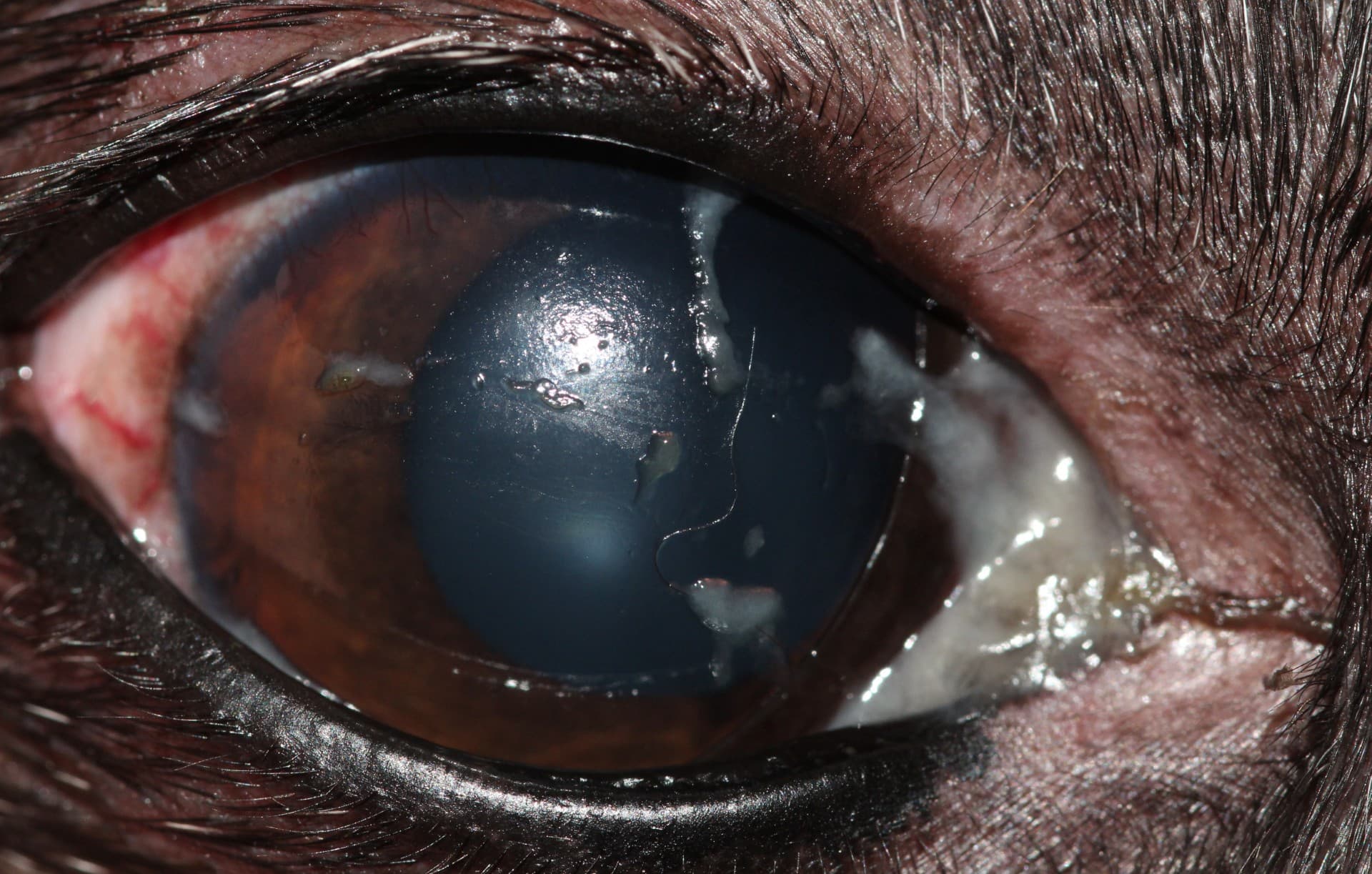
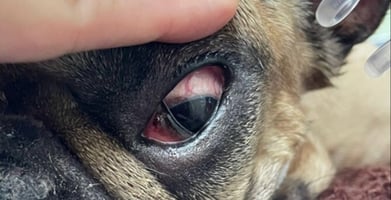
The right eye of an 8 year old MN greyhound with sudden bilateral dry eye which was fed Years fresh food. The thick, sticky discharge is stuck to the cornea, there is conjunctival hyperaemia, and a distorted Purkinje image indicating poor/absent tear film
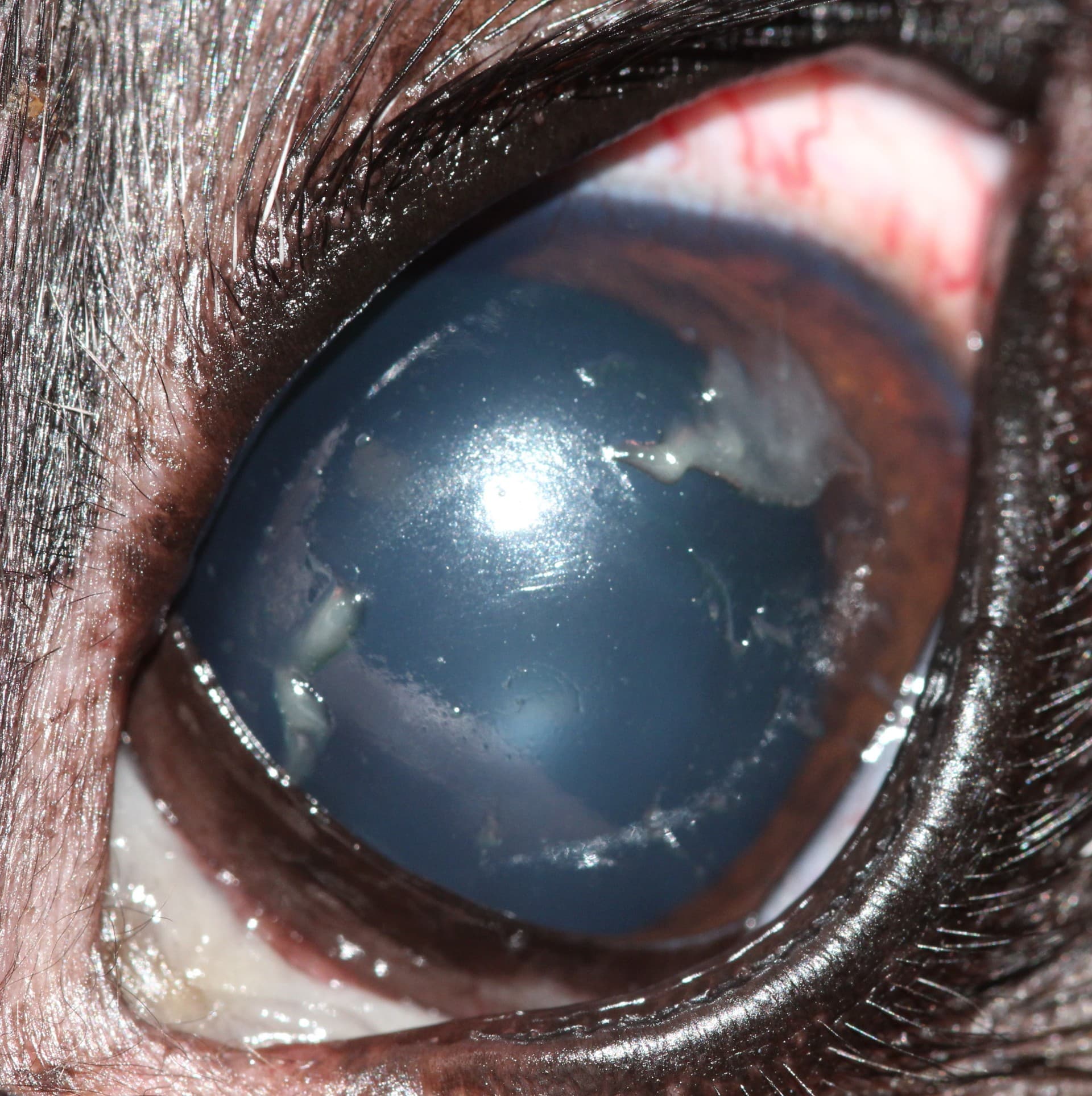
The left eye of the same dog. Again, the very dry ocular surface is notable by the distorted Purkinje image, and there is thick, sticky discharge stuck to the cornea and more conjunctival hyperaemia.
The red flag: sudden bilateral dry eye
Victoria says the cases seen by her service have looked noticeably different from much of the KCS they would usually expect to see.
The main features have been:
- sudden onset, with owners often describing signs developing over days to weeks
- bilateral disease
- very low or completely absent tear production, including dogs recording 0 mm/min on Schirmer tear testing in both eyes
- no associated dry nose
- cases occurring across a wide range of breeds and ages
“Notably, we were seeing cases that were presenting acutely, with severe, bilateral disease,” Victoria said. “Many of these patients were presenting with completely absent tear production (STT 0mm/min both eyes), which was unusual.”
Lorraine has seen much the same thing.
“They’re definitely less than 5mm/min,” she said. “They’re low, they’re bilateral, and you just think, ‘What’s going on here?’ You know, this is not normal.”
Owners have frequently reported that signs appeared over a period of days to weeks, rather than the more chronic presentation commonly associated with KCS.
The patients themselves have also been less predictable than the ophthalmologists’ usual KCS caseload.
“We noted that we were seeing these cases across a spectrum of breeds and ages, which differed to our ‘normal’ or expected KCS patients — generally middle aged and older dogs,” Victoria said.
Be careful not to jump to conclusions
That does not mean every Years-fed dog presenting with dry eye should automatically be considered part of the current cluster. Feeding history is one part of the picture, and vets should still consider other recognised causes of KCS and assess each case on its own clinical findings.
And, importantly, Lorraine says there appear to be dogs developing the same acute, bilateral pattern without a history of eating Years food. That makes it particularly important not to use diet as the sole criterion for recognising or reporting a possible case. Instead, vets should report all cases that fit the pattern, in order to prevent a biased sample.
Another potentially useful distinction is the nose. Neurogenic KCS can cause an ipsilateral dry nose alongside the dry eye, but Lorraine says that has not been a feature of the cases ophthalmologists are currently investigating.
“You might think it’s neurogenic, but they don’t have a dry nose,” she said. “That’s an important distinguishing factor on these cases.”
Some ophthalmologists have trialled pilocarpine in suspected cases without seeing the response they would expect from neurogenic KCS.
What should vets do when a possible sudden dry eye case presents?
A history of eating Years Fresh Meals should prompt a few additional questions, but it should not replace a proper ophthalmic work-up.
1. Ask about feeding history
Take a full feeding history, rather than simply asking whether the dog has eaten Years. Record the main diet, other foods and treats, recent dietary changes and, where possible, when these were introduced in relation to the onset of signs.
Diet is still potentially useful epidemiological information, but it should not determine whether a case is recognised or reported. Similar cases have now been identified in dogs that have never eaten Years, both in the UK and elsewhere.
2. Carry out an appropriate eye examination
It's important not to jump to conclusions, and instead examine the eyes as usual.
Schirmer tear testing should form part of the assessment where KCS is suspected, alongside examination of the ocular surface, assessment of the cornea and fluorescein staining where appropriate. With severe tear deficiency, the cornea can quickly become vulnerable to desiccation, trauma and ulceration.
Recording the STT result for each eye is particularly useful in these suspected cases. Both ophthalmologists have seen extremely low or absent tear production in both eyes.
The combination of sudden onset, bilateral disease and severe tear deficiency should therefore raise suspicion and prompt a report, whether or not the dog has a Years feeding history.
Other possible causes should still be considered rather than assuming the recalled food is responsible.
3. Treat the eye in front of them
Years’ investigation has not identified a food-safety problem or causal link, but the cause of the wider cluster of sudden bilateral dry eye remains unknown. Vets do not need to wait for that work to conclude before treating the ocular disease in front of them.
“With absent or severely reduced tear production, timely and intensive treatment is essential,” Victoria said.
Initial treatment
From an ophthalmic perspective, Victoria recommends starting immunomodulatory treatment where the Schirmer tear test result is below 15mm/min, alongside topical lubrication.
Lorraine also recommends initially treating these dogs as KCS rather than assuming they have a completely different disease process.
“I think you’ve got to assume that it’s a normal dry eye first,” she said.
In her approach, that means starting with the licensed ciclosporin product Optimmune and allowing time to assess the response before considering alternatives such as tacrolimus where appropriate.
Even where the underlying problem ultimately turns out not to be immune-mediated, Lorraine says these treatments can still benefit the ocular surface.
“They still reduce inflammation, they reduce vascularisation, they reduce the conjunctival hyperaemia,” she said. “They do actually help the ocular surface, but they’re not stimulating tears, which is what you primarily want them to do.”
For both ophthalmologists, however, ocular lubrication is central to managing the severely affected cases.
“With 0mm/min tear production, corneal lubrication should be applied as frequently as possible — at least 6–8 x a day,” Victoria said. “With production of 10–15mm/min, application around 4x daily may be sufficient.”
Formulation can also make a difference to how practical that treatment is for an owner.
“Gel lubricant formulations [like Xailin Night and Hylo Night] tend to last longer than drops but may cause a degree of vision blurring,” Victoria said. “These are useful at nighttime and when people need to leave their pets for >3hrs.”
For daytime lubrication, Victoria said they aim for drop-based products with a high percentage of sodium hyaluronate, such as Hyabak and Hylo-Forte.
Lorraine takes a similar approach, often combining a thicker hyaluronate product for longer-lasting lubrication with something more fluid where there is a large amount of discharge.
“The discharge is quite profound, so you also need something a little bit more watery to help flush the discharge out,” she said.
She has been using sterile saline to help owners clear discharge before applying lubricants.
Pain management should not be forgotten either.
“These dogs are painful,” Lorraine said. “Pain relief is important.”
She would generally start with an NSAID where appropriate and increase analgesia if needed, although she cautioned that pain relief alone cannot compensate for an inadequately protected ocular surface.
Don't forget that with no proven link between Years and these cases, changing diet is not sufficient treatment - they should be treated aggressively, and treatment should only be withdrawn under guidance, after STT shows improvement.
What if there is corneal ulceration?
“Without adequate tears, the cornea is extremely vulnerable to desiccation, abrasion and ulceration,” Victoria said.
Lorraine is particularly cautious about ulcers developing in these patients because the absence of a normal tear film may impair healing.
“They’re probably going to start off as superficial, but then they are going to have their predisposition to go stromal because there’s nothing there to promote healing in the tears,” she said.
She recommends treating ulcerated eyes proactively and monitoring them closely. Where infection is present, topical antibiotics may be required, while eyes at risk of stromal degradation or melting may need anti-collagenase treatment such as serum or plasma.
“I think you have to treat them as if they might start to melt,” Lorraine said. She would consider introducing serum or plasma early in an ulcerated case, and to consider referral early on.
4. Offer referral early
Not every suspected case needs to go straight to an ophthalmologist, but the two vets we spoke to would both keep referral firmly on the table.
“If vets are struggling to manage these cases, and particularly if they cannot manage comfort levels, we would recommend referral,” Victoria said.
Lorraine recommended being open with owners and offering referral from the beginning, as part of the options.
“I think I would be speaking to owners and saying, ‘This could be one of those cases, in which case we know it’s going to be complicated,’” she said. “So I would offer it from the outset because some owners are going to take it and some owners aren’t.”
If the eye becomes ulcerated or develops other complications, she would recommend referral is sought, because the healing is likely to be impaired by the lack of tears.
For first-opinion vets, the decision will depend on the individual dog, the severity of the disease and whether they feel able to maintain comfort and protect the cornea. But offering owners the option of referral early may be sensible, particularly given that some cases have proved difficult to control.
What other options are there for these dry eye cases?
Referral ophthalmologists may be able to consider additional medical treatment as well as surgical management of complications.
Some ulcerated dogs have required procedures such as conjunctival grafting where corneal disease has progressed.
For KCS that cannot be controlled medically, parotid duct transposition (PDT) may also be considered. The procedure redirects the parotid duct so that saliva wets the ocular surface.
“The next step if medical treatment isn’t working is surgery,” Lorraine said. “Parotid transposition isn't a simple operation. It comes with its own issues and complications and side effects, but it will ultimately give them wet eyes.”
She said several veterinary ophthalmologists involved in discussing these cases have already resorted to PDT in severely affected dogs.
In general practice, and in referral, enucleation remains a possible final option where an eye cannot be kept comfortable.
5. Monitor closely for a response or deterioration
There is still limited information on the expected course of these suspected cases.
Monitoring should include repeated STT results alongside comfort, discharge, inflammation and the health of the corneal surface. This should be done frequently - every week to start with. However, Lorraine advises allowing enough time to judge the response when treatment is changed - at least two weeks - to see if a difference has been made. And if there is to be any recovery, it could take several months.
Vets should remember to give owners clear warning signs that should prompt an earlier recheck, particularly a marked increase in redness, pain or a sudden change in the appearance of the eye.
Can tear production recover?
At the moment, the picture appears mixed. Some of the suspected cases have improved, especially after the diet has been stopped, while others have proved far harder to manage.
“Many of the cases have been refractory to treatment,” Victoria said. “For these patients, we are heavily reliant on frequent corneal lubrication.”
Even in those patients, she said immunomodulatory treatment often remains indicated “to manage the local environment and to minimise secondary inflammation”.
But the experience has not been uniformly poor. There are reports circulating among owners of dogs improving after the recalled food is withdrawn, including suggestions that tear production can begin to recover within a matter of weeks. Both ophthalmologists think recovery may be possible in at least some dogs, but it is far too early to give owners a reliable timeframe or prognosis.
“Some cases have responded,” Victoria said. “Hence, seeking timely veterinary advice and instigating treatment early remains essential.”
Lorraine suspects that how advanced the damage is when the dog is first identified may matter.
“I suppose it depends on how much of the gland is destroyed and whether or not that can then regenerate,” Lorraine said. “We’re yet to answer that question.”
“I think there will be cases that reverse, and that’s great, but there will be other cases that are too far down the line. I think only time now is going to tell.”
That uncertainty also influences when Lorraine would consider moving from intensive medical management to irreversible or major surgical options.
“I would be giving these serious amounts of time,” she said.
Where an owner can maintain the treatment burden, the corneal surface remains healthy and vision is not deteriorating, she would be prepared to persevere for months rather than weeks to give tear production a chance to return.
“If they can do things for six months and the corneal surface is not deteriorating — it’s not becoming pigmented, or they’re not losing their vision — then I think it’s worth persevering and seeing if it is reversible,” she said.
BrAVO is also warning against stopping prescribed dry-eye treatment simply because the dog is no longer fed Years. The group says significant injury to the tear-producing glands is suspected in some affected dogs, and changing diet alone may not restore tear production. Treatment should therefore only be reduced or stopped on veterinary advice.
For now, vets should therefore be cautious about giving owners a specific recovery timeframe. Rapid recovery may occur in some dogs, but others may need prolonged and intensive management.
6. Report potential dry eye cases
BrAVO’s wider investigation into sudden-onset bilateral KCS is continuing, and collecting cases irrespective of diet remains important. Vets seeing dogs that fit the unusual acute, bilateral and severely tear-deficient pattern should report them through BrAVO’s case form.
This is particularly important now that similar cases have been identified in dogs with no history of eating Years. Broad reporting should help researchers investigate diet alongside other possible factors without building diet into the case definition itself.
What happens next?
Years has completed its food-safety investigation without identifying a contaminant or other problem that could explain the reported cases. The wider clinical investigation into acute bilateral KCS is continuing.
BrAVO data is being validated and analysed. Its investigation is independent of Years, with the company having no role in collecting, analysing or interpreting the BrAVO data.
Separately, Years is funding work led by veterinary ophthalmologist David Williams at the Queen’s Veterinary School Hospital, Cambridge. This will include histopathological examination of lacrimal tissue from affected dogs, which may help researchers understand what is happening to the tear-producing glands.
For now, the cause remains unknown. BrAVO continues to encourage vets to report relevant cases regardless of diet and stresses that treatment should not be stopped simply because a dog’s diet has changed.
Conclusion
For vets seeing affected dogs in the meantime, the key points are to:
-
Ask about feeding history (without allowing it to dictate the diagnosis)
-
Look for the unusually acute, bilateral and severe pattern described by ophthalmologists
-
Assess and record tear production and corneal health properly
-
Protect the ocular surface aggressively, and
-
Offer referral where appropriate.
- Fill out BrAVO's form to get the researchers the information they need.
Some dogs appear to improve. Others may have permanent damage. As Lorraine explains above, severely affected dogs may need months of medical management before it becomes clear whether tear production is going to recover.
What has changed is our understanding of the cluster around them. Years’ investigation has found no evidence of contamination or another food-safety problem, while comparable cases have now been identified in dogs that have never eaten Years and in countries where Years is not sold.
The cause therefore remains unresolved. BrAVO’s case collection, longer-term treatment data and the planned investigation of lacrimal tissue may provide the next pieces of the puzzle.
Improve Veterinary Education will update this article as further evidence, investigation results and specialist guidance become available.
Author