
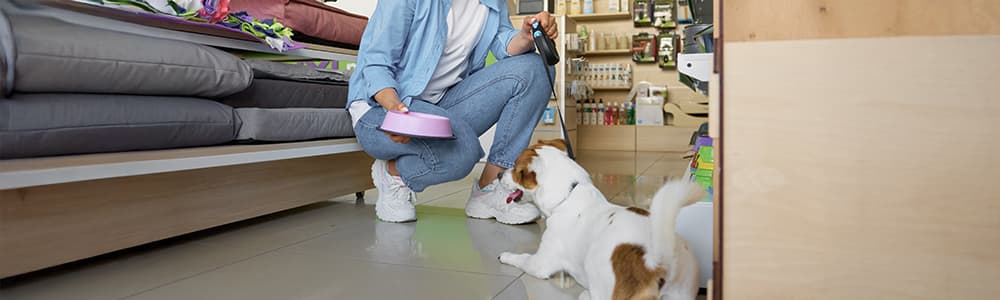

Puppies need the right start in life. Their experiences during the sensitive developmental period shape how they will respond to the world as adults. Socialisation refers to the structured introduction of puppies to new stimuli including people, animals, handling, sounds and environments, in a way that prioritises emotional safety and encourages positive associations. Research shows that appropriate socialisation during the early sensitive period significantly decreases the risk of behavioural problems in adulthood (Seksel, 2008; Landsberg et al., 2008). Positive early experiences lay the foundations for confident adult behaviour, while negative or overwhelming experiences during this period increase the risk of fear, anxiety and aggression later in life (Landsberg et al., 2008).
Within veterinary practice, socialisation sessions commonly referred to as ‘puppy parties’ are increasingly offered, and some veterinary practices run them weekly (Christos and Buckley, 2022). This places veterinary professionals in a unique position. The veterinary practice is usually the first point of contact for new puppy owners, not only for vaccinations but as a trusted source of reliable information. Owners expect guidance. Veterinary teams play a central role in both preventing and treating behavioural problems (Landsberg et al., 2008). Puppy parties represent more than a social opportunity: they are an intervention for behavioural prevention. In this article, I’ll share some top tips for making sure your puppy parties are a success, both now, and for the puppies’ future.
The benefits of puppy parties
For many new owners, early puppy behaviour can feel overwhelming. What they perceive as “problem behaviour” - chewing, mouthing, toileting indoors - is often entirely normal developmental behaviour (Seksel, 2008). When owners understand what is normal, they are better able to manage it effectively and teach acceptable alternatives without unnecessary frustration. Puppy parties provide the ideal environment to educate owners on these developmental stages. Owners can observe demonstrations, practise handling and training techniques and receive reassurance that certain behaviours are common and temporary. This reframing not only reduces stress for owners but improves welfare outcomes for the puppy.
Puppy parties provide the ideal environment to educate owners on these developmental stages.
The benefits extend beyond behaviour. When puppies experience the veterinary practice as a calm and enjoyable place, a space filled with treats, positive interactions and friendly faces, they build favourable emotional associations. This makes future visits far less stressful, reducing the likelihood of fear or aggression during clinical examinations. Simultaneously, the practice benefits from increased owner loyalty. Repeated positive interactions with the veterinary team strengthen the relationship between guardian and practice, meaning owners are more likely to seek behavioural advice early and continue lifelong preventive healthcare.
When a puppy party goes wrong
However, not all puppy parties are beneficial. Poorly structured or overcrowded sessions can do more harm than good. A chaotic, free-for-all gathering of puppies can quickly lead to over-arousal, fear or even defensive aggression. Puppies learn through repetition; if a puppy repeatedly experiences stress or conflict around unfamiliar dogs, these emotional responses may persist into adulthood. Worse, if a puppy becomes overwhelmed during a puppy party, the veterinary practice itself, rather than the situation, may become the trigger for their fear.
A chaotic, free-for-all gathering of puppies can quickly lead to over-arousal, fear or even defensive aggression.
5 tips to make sure your puppy parties are positive for all:
1. Design the environment
To ensure welfare is prioritised, puppy parties must be intentionally designed. The environment plays a major role in emotional safety. Puppies need the option to move away or observe from a distance before choosing to engage. Creating areas within the room where nervous or smaller puppies can retreat allows them to take part without becoming overwhelmed. Giving them the choice to disengage is essential, as puppies cannot learn if they do not first feel safe.
2. Train your staff well
Human behaviour also has a significant impact on how secure a puppy feels. Puppies can perceive direct eye contact, looming posture or reaching over their head as threatening. Approaching animals from above increases perceived threat and can escalate signs of fear (Moffat, 2008). Staff should instead crouch down, turn their body slightly sideways and allow the puppy to initiate contact. This approach reduces visual pressure and helps the puppy feel in control of the interaction. Even clothing can influence perception. Large, dark or bulky clothing can create a more intimidating silhouette, whereas softer tones and kneeling to the puppy’s level minimise visual threat.
3. Make leads a house rule
Throughout the session, puppies should remain on lead. This is not about restricting movement but about ensuring controlled and safe introductions. Puppies who are allowed to rush up to others may practise pushing, chasing or bullying behaviours, while more sensitive puppies can become fearful or defensive. Keeping puppies close to their guardians fosters confidence, supports emotional regulation and allows staff to monitor subtle signs of discomfort. Early education on reading canine body language is vital. Kendel Shepherd’s Ladder of Communication (originally Ladder of Aggression) demonstrates that dogs give several early communication signals, such as looking away, lip-licking or freezing long before growling or biting (Shepherd, 2009). Teaching owners to recognise these early signs prevents misinterpretation and protects puppy welfare.
4. Make sure physiological needs are met
Asking each owner to bring their own water bowl provides hydration while supporting infection control.
Practical needs also matter. Puppies must have access to water, but shared bowls carry cross-contamination risk. Asking each owner to bring their own water bowl provides hydration while supporting infection control. This also reflects the concept of meeting physiological needs before training expectations are introduced. A puppy whose basic needs for comfort, safety and hydration are met is more capable of learning. Framing this through a simple ‘hierarchy of needs’ helps owners understand that welfare comes before social interaction, and social interaction comes before training.
5. Help owners to practice difficult techniques
Puppy parties also provide a valuable platform to discuss early training aimed at preventing future behavioural difficulties, including separation-related issues. Separation anxiety is a common behavioural concern seen in veterinary practice, yet early prevention is highly effective. Teaching owners how to encourage independent settling, reward calmness away from the owner and introduce short, predictable absences can build resilience. By addressing this during puppy parties, owners learn that independence training is not unkind, it is preventive welfare.
Conclusion
[Puppy parties] create positive associations with the veterinary practice, reduce fear during future visits and encourage owners to engage with the veterinary team early and often.
When delivered with welfare and behaviour as the focus, puppy parties become more than a social event for puppies. They become a structured educational service that provides owners with knowledge, confidence and support, while setting puppies up for behavioural success. They create positive associations with the veterinary practice, reduce fear during future visits and encourage owners to engage with the veterinary team early and often. In contrast, poorly structured sessions risk creating negative experiences that may persist into adulthood.
Puppy parties must therefore be designed intentionally, with emotional safety at their core. They are not about play. They are about prevention. By ensuring that every interaction supports welfare, encourages learning and empowers owners, veterinary practices can help puppies begin life feeling calm, confident and understood, and lay the foundation for a lifelong positive relationship with veterinary care.
References (click to expand)
Veterinary-led puppy parties: A cross-sectional survey to quantify the methods and approaches undertaken within UK veterinary practices by Chantalle Christos and Louise Anne Buckley , Journal of Veterinary Behaviour 58 (2022) 1–9
Landsberg, G., Hunthausen, W. and Ackerman, L. (2008) Behaviour Problems of the Dog and Cat. 3rd ed. Saunders Elsevier.
Moffat, K. (2008) Addressing canine and feline aggression in the veterinary clinic. Journal of Veterinary Behaviour, 3(1), pp. 24–32.
Seksel, K. (2008) Training and Behaviour of Dogs and Cats. Blackwell Publishing.
Shepherd, K. (2009). Behavioural medicine as an integral part of veterinary practice. In: Horwitz, D. and Mills, D. (eds.) BSAVA Manual of Canine and Feline Behavioural Medicine. Gloucester: British Small Animal Veterinary Association, pp. 10–23.
Author
Clare Bradley qualified as a Registered Veterinary Nurse in 2003 after completing a BSc in Veterinary Nursing and has remained in clinical practice ever since. Clare’s interest in behaviour led her to gain a master’s degree in Companion Animal Behaviour Counselling from the University of Southampton in 2012. Clare is an Associate Member of the Association of Pet Behaviour Counsellors (APBC), having met the academic requirements for the Clinical Animal Behaviourist pathway. She is now gaining the practical experience needed for full CAB assessment and undertakes behaviour consultations with APBC support. Through her Oxford-based service, Talking Pet Behaviour, Clare provides tailored behaviour consultations for dogs and cats focused on emotional health and veterinary–behaviour integration. In 2023, Clare qualified as a Puppy School tutor and now runs Puppy School Oxford City, delivering structured, welfare-led training for puppies using positive reinforcement.
.png?height=200&name=download%20(2).png)