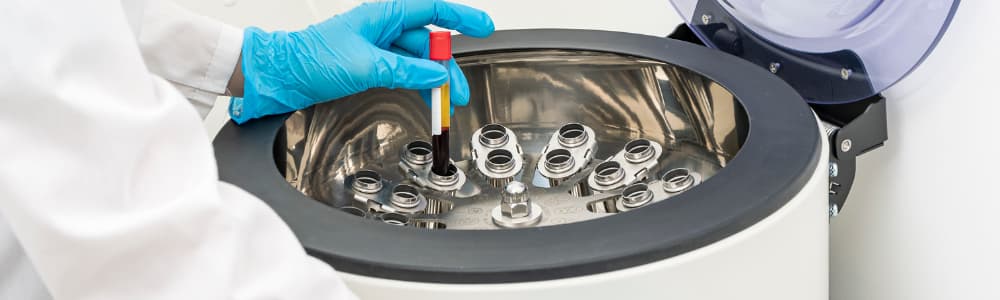
In-house blood machines are an essential part of modern veterinary practice. They allow us to get blood results within minutes, helping vets make decisions about everything from emergency treatment to ongoing disease management without sending to an external lab.
But this independence also makes in-house analysers a potential risk - if the machine gave out incorrect results, it could be dangerous for patients. Modern analysers have built-in checks and will flag certain errors, but they can't detect every problem. An analyser might produce a perfectly plausible result despite an issue with its reagents or performance.
This is why laboratory quality assurance (QA) matters. For veterinary nurses who use and maintain in-house laboratory equipment, understanding how to check that results are reliable is an important part of the role.
What does veterinary laboratory quality assurance involve?
Quality assurance is about making sure your veterinary laboratory produces reliable results. It includes everything from sample collection and equipment maintenance to checking the accuracy of test results.
Two important parts of laboratory quality assurance are:
- Internal quality control (IQC): Running samples with known or expected values to check that your analyser is performing within acceptable limits.
- External quality assessment (EQA): Testing samples provided by an independent organisation and comparing your results with those from other laboratories.
Both are useful. Internal QC helps you monitor your analyser's performance, while EQA can identify problems that your routine checks might miss.
Internal quality control (IQC)
Internal quality control usually involves testing a specially prepared control sample, then checking whether the result falls within an acceptable range.
Frequency of quality control testing
The frequency of recommended IQC depends on the analyser, its testing system, and how it is used. The American Society for Veterinary Clinical Pathology (ASVCP) generally recommends checks at least weekly, and more frequently for some analysers. However, manufacturers' recommendations vary, with some IDEXX analysers recommending monthly checks. Follow the manufacturer's instructions, taking your testing frequency and the risks of inaccurate results into account. Additional checks may also be needed after maintenance, repairs, reagent changes, or suspected problems.
Undertaking quality control testing
Your lab machines should come with instructions for internal IQC processes. Follow these carefully to ensure any results are trustworthy.
Tip: Don't forget the control material itself. Follow the instructions for preparation and handling, including whether the material needs mixing or bringing to room temperature before testing.
What to do if IQC on a vet lab machine fails?
A failed IQC check doesn't necessarily mean your analyser is broken, but it does mean you need to investigate.
If a control result falls outside the acceptable limits:
-
Stop using the machine for patient results until the problem has been resolved. Alert the team so nobody uses the machine.
-
Consider whether recent patient results may also have been affected, particularly if they have already been used to make treatment decisions.
-
Check simple explanations (see Table 1)
-
Check whether anything has changed since the last run (good documentation helps here!)
-
Once you've identified and corrected the cause, repeat IQC according to the manufacturer's instructions. If the problem continues, contact technical support.
- Record what happened and how it was resolved, so you have a reference if it happens again.
| Error category | What to check |
| Control material | Is it the correct material and lot? Has it been stored and prepared correctly? Is it within its expiry and stability period? |
| Reagents | Are they in date, correctly stored, and properly installed? Have they recently been changed? |
| Technique | Was the correct volume used? Was the material mixed and processed according to instructions? |
| QC settings | Are the correct target values and acceptable limits selected for this control material and lot? |
| Analyser | Are there any error messages? Check for overdue maintenance. |
| Environment | Is the analyser operating within the recommended temperature and humidity ranges? |
Table 1: Things to check after a quality control failure on a veterinary lab machine.
Tip: Don't keep repeating a failed QC check until you get a passing result. A normal result doesn't explain why previous checks failed, and you could miss a genuine problem.
Spotting trends in IQC results
Quality control isn't just about passing or failing individual checks. Reviewing results over time can help you recognise a developing problem.
For example, imagine a control sample that should produce a glucose result of around 5.5 mmol/L. Over several weeks, the readings gradually increase from 5.4 to 5.6, then 5.8 and 6.0 mmol/L. These results might all be within the acceptable range, but the upward trend could suggest that something is changing.
Keeping records and looking for trends over time can help you spot potential issues before they cause a problem for a patient.
External quality assessment (EQA)
External quality assessment (EQA) provides an independent check of your analyser's performance. Participating practices receive samples from an external provider, test them using their usual equipment, and submit the results. These are then compared with results from other laboratories, ideally using similar analysers and methods.
It's worth checking how a scheme assesses your results. Some services compare a sample tested in-house with results from a reference laboratory. While this can be useful, differences between analysers and testing methods can make comparisons difficult to interpret. Formal EQA programmes provide a more standardised assessment, usually comparing results from laboratories using similar equipment and methods.
The advantage is that EQA can identify problems that internal QC might miss, such as an analyser consistently producing results that differ from those obtained elsewhere. It also provides independent evidence that your equipment is performing as expected.
Frequency of external quality assessment
The ASVCP recommend that EQA is undertaken at least quarterly, and this is echoed by the RCVS Practice Standards Scheme (PSS) in their standards for Veterinary Hospitals. Again, the exact frequency will depend on your procedures, throughput, and risk tolerance, as well as what's offered by EQA schemes near you.
Undertaking external quality assessment
You may have guessed from the word 'external', but EQA isn't something you can do alone! Your practice will need to subscribe to an EQA scheme. Once you're in, follow the programme carefully - usually you'll receive a sample in the post, process it according to the instructions, and return your results to the scheme provider, who will write a report.
What to do with your EQA results
Once you've got the EQA, review any results that fall outside the expected range and investigate possible causes, including sample handling, technique, and analyser performance. The EQA provider or equipment supplier may be able to help interpret unexpected findings.
Keep copies of the reports and record any action taken. This gives you a useful history of your analyser's performance and helps demonstrate that problems have been followed up.
Making quality assurance part of your veterinary practice routine
In a busy veterinary practice, quality assurance needs to be straightforward enough that everyone can follow it consistently.
Having one person responsible for overseeing the laboratory can help. They don't need to perform every check, but they should make sure QC is carried out, results are reviewed, and any problems are resolved.
A simple system should cover:
- Regular checks: Know what tests each analyser needs and when it should be performed.
- Clear instructions: Make sure everyone knows how to carry out QC/EQA and what to do if a machine fails.
- Good records: Keep results, maintenance information, and details of problems and corrective actions together.
- Periodic reviews: Check for trends, repeated failures, and outstanding problems.
It's worth reviewing your current arrangements. Does everyone using the analyser know what to do when QC fails? Are results being recorded and reviewed, or are checks simply marked as complete? And when was the last time you looked at your external quality assessment report?
Conclusion
Veterinary nurses play a central role in keeping practice laboratories running reliably. Understanding quality assurance means going beyond simply operating an analyser — it helps you recognise when something isn't right and take action before unreliable results affect patient care.
References (click to expand)
- Flatland B, Freeman KP, Vap LM, Harr KE. (2013). ASVCP guidelines: quality assurance for point-of-care testing in veterinary medicine. Veterinary Clinical Pathology, 42(4), 405–423. https://doi.org/10.1111/vcp.12099
- Arnold JE, Camus MS, Freeman KP, et al. (2019). ASVCP Guidelines: Principles of Quality Assurance and Standards for Veterinary Clinical Pathology (version 3.0). Veterinary Clinical Pathology, 48(4), 542–618. https://doi.org/10.1111/vcp.12810
- Camus MS, Flatland B, Freeman KP, Cruz Cardona JA. (2015). ASVCP quality assurance guidelines: external quality assessment and comparative testing for reference and in-clinic laboratories. Veterinary Clinical Pathology, 44(4), 477–492. https://doi.org/10.1111/vcp.12299
- Royal College of Veterinary Surgeons (RCVS). Practice Standards Scheme: Small Animal Modules and Awards. Module 9, Laboratory and Clinical Pathology, requirement 9.3.8. https://www.rcvs.org.uk/document-library/small-animal-modules/pss-small-animal-modules-and-awards-v3.3-.pdf
- IDEXX Laboratories. Catalyst One Chemistry Analyzer: Operator's Guide. Quality control procedures and recommended frequency. https://www.idexx.com/files/catalyst-one-analyzer-operators-guide-en.pdf
- SRUC Veterinary Services. Capital External Quality Assessment Scheme (C-QAS). https://www.sruc.ac.uk/business-services/veterinary-laboratory-services/capital-external-quality-assessment-scheme/
- IDEXX Laboratories. External Quality Assurance Programme. https://www.idexx.co.uk/en-gb/veterinary/reference-laboratories/eqa-programme/
Author

After graduating from the University of Nottingham in 2016, Jo moved into small animal practice in the midlands, where she grew a passion for client communication and the subjects that most need it - like geriatrics and dermatology. Since 2020 she has worked as a locum vet in the Channel Islands as well as as a content writer in pet health topics.