Veterinary staff are often familiar with the concept of blood transfusions in our canine and feline patients, but many are unaware of the possibilities in exotic patients. Avian blood transfusion is not only very possible in clinical practice, but widely used in indicated cases – its use has been reported as far back as 1977 (Harrison, 1977).
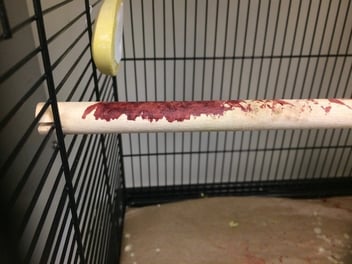
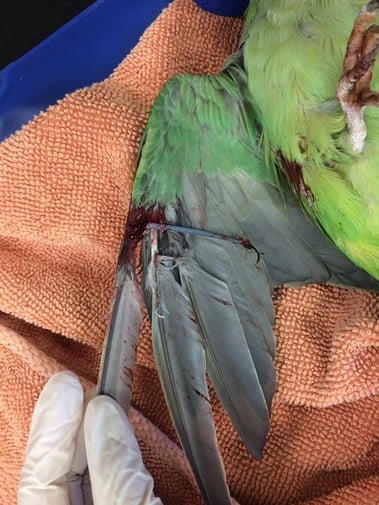
Signs of anaemia in birds are very similar to our more commonly seen species. The bird may present following a traumatic episode resulting in significant blood loss (Figure 1) or even from accidental trauma to a growing blood feather (Figure 2). Anaemia can present as pallor of the mucous membranes and feet, pallor of the comb and wattle in chickens or pallor of normally red extremities (Figure 3) (Lichtenberger and Lennox, 2016; Raftery and Kischinovsky, 2019). Chronic anaemia can occur for a number of reasons including endoparasitism, haemoparasitism, toxicities including heavy metal toxicities, infections, immune-mediated disease, coagulopathies, neoplasia and hyperoestrogenism (Martinho, 2009).
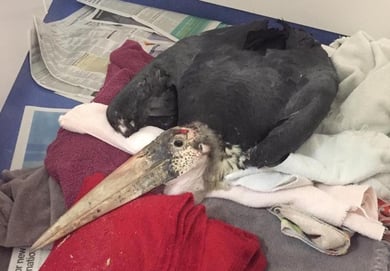
Birds have a blood volume that is roughly between 4 and 8 percent of body weight in grams (Martinho, 2009). For smaller birds, this means that even a small loss of blood volume can be significant. Due to this, any client calling about active haemorrhage in their pet bird should be seen immediately with emergency priority.
When the bird is presented to the clinic, the initial emergency examination should evaluate for the presence of active haemorrhage which, if present, should be stopped immediately. Depending on the injury, this can be with digital pressure, bandaging or the use of haemostatic dressings. If the bird is not actively bleeding, a physical examination should be performed. This should first involve a distance examination with the bird still in the cage or carrier, then a hands-on physical examination. It is important to stop the hands-on examination immediately if the bird becomes distressed, dyspnoeic or cyanotic.
Birds are able to tolerate acute blood loss better than mammals as they are able to quickly mobilise immature erythrocytes from the bone marrow and can swiftly draw fluid from the extravascular space (Martinho, 2009). One study showed that ducks display no evidence of hypovolaemic shock until up to 60 percent of their blood volume was removed (Lichtenberger et al., 2009). Chickens have been shown to return to a normal packed cell volume (PCV) 72 hours after 30 percent of their blood volume was removed (Ploucha et al., 1981), and pigeons were shown to return to normal PCV within seven days of the removal of 60 percent of their blood volume (Finnegan et al., 1997).
Blood groups have been studied in chickens and some Anseriformes species but are relatively unknown for the majority of species. Due to this, it is considered that the first heterologous donation is likely to be safe but cross-matching should ideally be performed prior to any blood donation (Martinho, 2009).
In cases of acute blood loss or suspected chronic anaemia, a small blood sample should be taken to assess the patient’s PCV. The PCV of avian patients varies depending on species, and within species can vary depending on sex, age and hormonal activity, but is usually in the range of 35 to 55 percent (Martinho, 2009). Ideally, a sample should be taken that is also enough to perform a blood film examination to assess for evidence of reticulocytes, thrombocytopaenia, leukocyte changes or haemoparasites; however, a balance must be struck between taking a sample large enough for diagnostics and removing more blood from a patient that is already hypovolaemic. Blood sampling sites include the right jugular vein, basilic veins or medial metatarsal veins (Dyer and Cervasio, 2008).
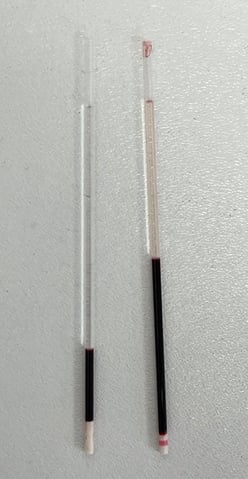
Blood transfusions are indicated in birds that have acutely lost more than 20 percent of their blood volume, patients with a PCV less than 20 percent (Figure 4) or patients with chronic anaemia that are undergoing surgery (Martinho, 2009). Any potential donor should be healthy and have no infectious disease; however, in emergency situations a fully disease-tested donor may not be present.
Ideally, a homologous donor should be found as the lifespan of erythrocytes has been shown to be longer in patients receiving blood from a homologous donor (Lichtenberger and Lennox, 2016). If a homologous donor is not available, then heterologous donation can be performed but a donor within the same genus is preferable (Martinho, 2009). Homologous transfusions between pigeons have been shown to have a lifespan of seven days, compared to 0.5 days for heterologous transfusions from pigeons to red-tailed hawks (Sandmeier et al., 1994); however, heterologous transfusions between conures of the Aratinga genus were shown to have a half-life of 4.5 days, compared to homologous donations with a half-life of 8.5 days (Degernes et al., 1999).
Once a donor has been found, 1 percent of the donor’s body weight can be collected under sedation or general anaesthesia, and replaced with crystalloid fluids (Martinho, 2009). Sodium citrate, heparin and acid-citrate dextrose have been described for use as an anticoagulant for bird blood donations (Morrisey et al., 1997). The use of a blood filter is recommended during transfusion, and several have been evaluated in avian transfusions (Jankowski and Nevarez, 2010).
Blood should be administered immediately to the recipient, as elongated storage times can elevate potassium levels within the donation (Martinho, 2009). Donations can be given via intravenous (IV) or intraosseous (IO) access. IV cannulas can be placed into the basilic vein, medial metatarsal vein or right jugular vein in birds the size of cockatiels or larger (Lichtenberger and Lennox, 2016). IO catheters can be used in small birds and should be placed in non-pneumatised long bones such as the proximal tibiotarsus or distal ulna (Bowles et al., 2007).
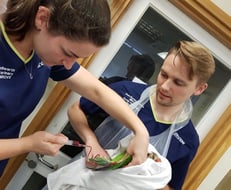
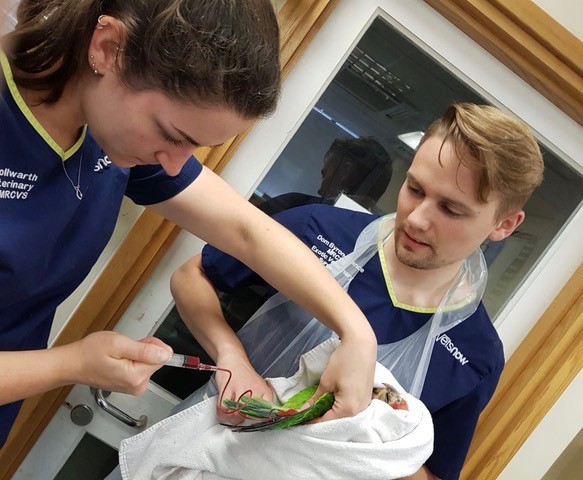
Transfusions should be given at 10 to 20ml/kg and should be administered slowly over 10 minutes by bolus injection (Figure 5), or over four hours with a syringe driver (Martinho, 2009).
During and following the transfusion, the patient should be closely monitored for any side effects. These can include urticaria, fever and anaphylaxis, which can be difficult to identify in birds but have been reported in birds that have received multiple blood transfusions (Martinho, 2009).
Following transfusion, the patient’s PCV should be rechecked and ideally should be 25 percent or higher. Further PCV samples should be taken in the days following the transfusion to assess the long-term response; however, the frequency of these samples depends on whether a homologous or heterologous donation has been performed.
Conclusion
Blood transfusions can be used for avian patients with life-threatening anaemia in the same way they can be used in our canine and feline patients. Blood donations can be provided between species as heterologous donations; however, a longer erythrocyte lifespan has been shown between patients of the same species. Birds tolerate blood donation well, and blood donation often improves clinical outcomes drastically, especially in cases of acute blood loss due to trauma.