
In clinical practice, treats for rabbits and guinea pigs are often overlooked, despite their potential impact on health and welfare. While owners may see treats as a harmless indulgence or bonding tool, many commercial options are nutritionally unsuitable for these species.
With an increasingly crowded and often confusing marketplace, veterinary professionals play an important role in helping owners make informed, welfare-led decisions. Recent research into commercially available rabbit and guinea pig treats highlighted several areas where product suitability does not always align with the nutritional requirements of these species.
What’s on the market – and where it falls short
The current small animal treat market is largely dominated by three categories: enrichment treats, forage-based options and hand-fed treats. Of these, forage treats typically comprising grass, hay, dried herbs or flowers were found to be the most nutritionally appropriate for rabbits and guinea pigs, supporting their high-fibre dietary requirements.
In contrast, many enrichment and hand-fed products contain ingredients that are unsuitable for herbivorous animals, including dairy, seeds, eggs, honey and added sugars.
In contrast, many enrichment and hand-fed products contain ingredients that are unsuitable for herbivorous animals, including dairy, seeds, eggs, honey and added sugars. While these ingredients may be appropriate for omnivorous species, they can pose significant health risks to rabbits and guinea pigs, including digestive disruption, obesity and dental disease.
At the same time, forage-based products, despite being the most appropriate, remain underrepresented on shelves, while more visually appealing or highly marketed alternatives dominate.
Labelling issues
Product labelling presents another challenge for owners. Around one third of products lacked full transparency about nutritional information, limiting the ability of owners to assess suitability. Additionally, marketing terms such as ‘natural’ were used inconsistently, often creating a perception of suitability that was not supported by the ingredient list. For example, ingredients such as honey or dried fruit may be perceived as natural but are not necessarily appropriate for species with highly specialised digestive systems.
From a clinical perspective, this presents a clear challenge: owners are frequently making decisions within a marketplace that does not consistently align with established nutritional principles.
Owner perceptions and behaviours
Encouragingly, owner awareness of nutrition appears relatively strong. Many owners prioritise health benefits, ingredient quality and natural formulations when selecting treats, with research showing that 86% actively read ingredient lists prior to purchase.
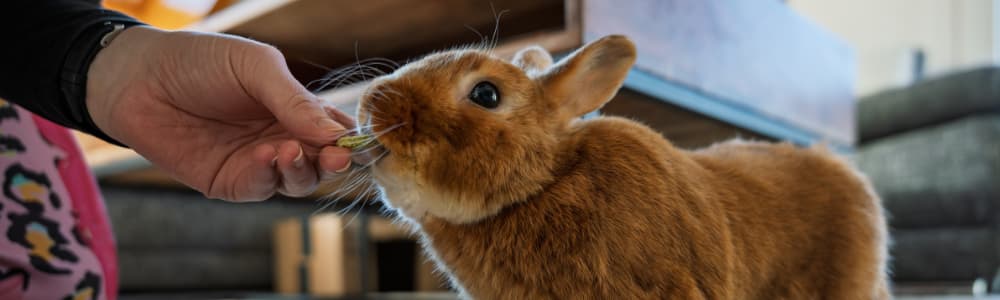
Treats are most commonly used for enrichment, bonding, or as a reward, with 50% of owners offering them on a daily basis. Grass and hay-based options, along with dried herbs and flowers, are generally well received and widely preferred.
Even well-informed owners can find it difficult to navigate misleading labelling, unclear marketing claims, and the prevalence of unsuitable products marketed for ‘all small animals’.
However, there remains a gap between intention and outcome. Even well-informed owners can find it difficult to navigate misleading labelling, unclear marketing claims, and the prevalence of unsuitable products marketed for ‘all small animals’.
The role of the veterinary team
With so many products available, owners can find it difficult to identify which treats are genuinely suitable for rabbits and guinea pigs. Veterinary professionals are well placed to provide practical, evidence-based guidance and help owners make informed choices.
Key messages to communicate include:
-
Encourage scrutiny of ingredients: Advise owners to look beyond front-of-pack claims and focus on composition. Ingredients such as dairy products, seeds, cereals and added sugars should raise concern.
-
Reframe ‘natural’: Help owners understand that ‘natural’ does not automatically mean appropriate. Explain what constitutes a species-appropriate diet in practical terms.
-
Promote forage-first thinking: Recommend treats that are grass or hay-based, and position these as an extension of the core diet.
-
Discuss frequency and purpose: Treats are often given daily, but it is important to reinforce moderation and ensure treats are used in a way that supports enrichment and bonding without compromising nutrition.
-
Highlight the risks of generalised products: Products marketed for ‘all small animals’ are rarely suitable for rabbits and guinea pigs specifically. Encouraging species-specific thinking is key.
Supporting appropriate treat use in practice
For rabbits and guinea pigs, treats should complement rather than replace a fibre-rich diet based on good-quality hay or grass. Forage-based options, such as dried grasses, herbs and flowers, are generally the most appropriate choice, supporting both nutritional needs and natural feeding behaviours.
Forage-based options, such as dried grasses, herbs and flowers, are generally the most appropriate choice, supporting both nutritional needs and natural feeding behaviours.
While treats can play a valuable role in enrichment and bonding, the current marketplace can make selecting suitable products challenging. By providing clear, practical guidance and encouraging owners to look beyond marketing claims, veterinary teams can help support better nutritional choices and improve long-term health and welfare outcomes for rabbits and guinea pigs.
Author
Ellie Parkes graduated from Harper Adams University in 2019 with a BSc (Hons) degree in Bioveterinary Science and has gone on to work for the market leaders in small animal nutrition, Burgess Pet Care, as their Nutritional Advisor. She recently completed an MSc in Animal Nutrition at the University of Nottingham. She has a particular interest in small animal nutrition and is dedicated to promoting their health and wellbeing.