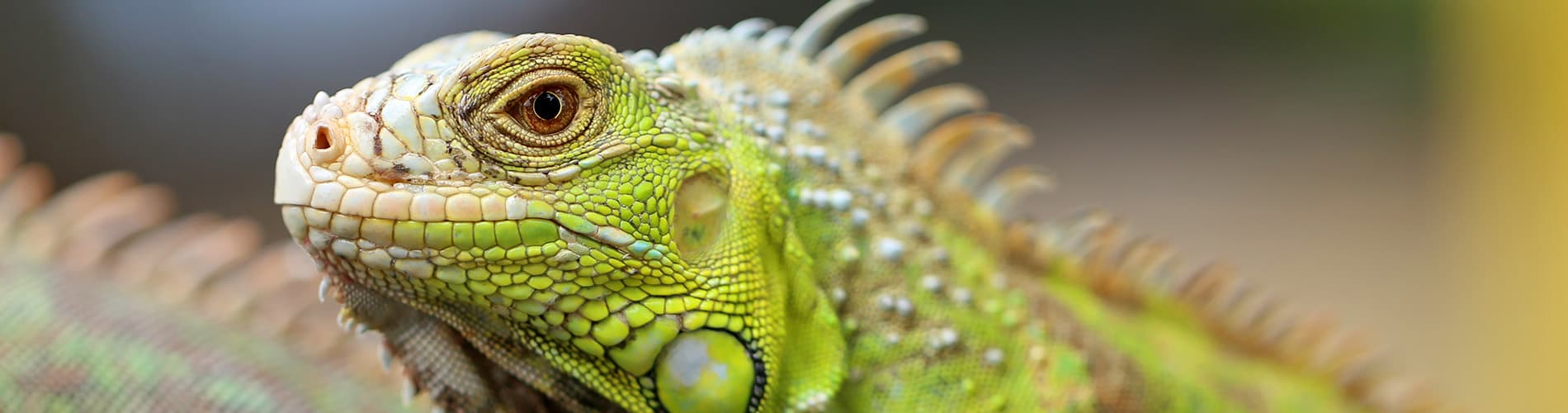
Understand and confidently treat the most varied species
Exotic pets often fill veterinarians with dread as they come through the practice door. This 140-hour RACE-approved CE program will assist you in overcoming the challenges these species present by broadening your knowledge of exotic medicine and surgery and streamlining your clinical approach regardless of species.
This program will cover the latest techniques and therapeutic options for birds, fish, ferrets, reptiles, primates, a variety of wildlife species, and more, and give you knowledge and skills that you can immediately apply in your practice.
Our online CE course has been designed to provide up-to-date knowledge across a wide range of different zoological, exotic, and wild species. Topics will include the initial examination and diagnostic sample collection, sedation and anesthesia, diagnostic imaging, and the workup and treatment of common diseases seen in those animals.
At the end of your Exotic Animal Practice course, you can choose to attend three practical attendance modules, which will cover small mammal surgery, avian surgery, and endoscopy. For those completing the full program, you can purchase these modules at an exclusive price. For more information, click on the Optional Modules tab.
Gain the confidence to expand the range of services your practice offers and boost your clinical enthusiasm and satisfaction with the support of the leading veterinary CE provider!
Hear what our delegates have to say
Don’t just take our word for it - our delegate feedback speaks for itself.

Dr Rob Clark
DVM CCRT
Improve Veterinary Education's Small Animal Surgery certificate gives veterinarians the skills to take on more challenging surgical cases. Finding a resource that offers practitioners both practical experiences, and the knowledge behind more c … Read more
Dr Gillian Marsh
DVM, GPCert (SAS)
I am an associate veterinarian working in an emergency hospital in Canada who has always had a strong passion for surgery. I have been in practice for 10 years now and I am always on the lookout for high quality CE opportunities, and I was very ex … Read more
Key features of this program
14 varied modules /140 hours of RACE-approved CE
Covering birds, reptiles, small mammals, primates, wildlife and more species delivered over 2 years
3 optional practical modules
You can choose to attend a 3-day in-person session consisting of 3 optional practical modules at the end of your program, covering small mammal surgery, avian surgery and endoscopy
Support and guidance from a specialist serving as your Module Tutor
The specialist in the subject area will provide online support during each module and will be available to answer all your questions
Multiple learning processes
Presentations, written notes, interactive quizzes and exercises which test your knowledge as you work
Discussion forum
A discussion forum for conversation, debate and sharing cases with your peers and Module Tutors
Four sessions per month
Each module consists of four sessions spread over one month. Sessions comprise separate lessons and case-based studies to work through at your own pace
Regular assessments
Pre-module and post-module assessments encourage you to reflect on your learning and evaluate your progress
Dedicated Improve Veterinary Education Program Coordinator
A coordinator who will support you every step of the way throughout your learning journey
Know-How
Join the global veterinary online learning CE specialist and benefit from our know-how and high-quality resources
100% online
Giving you access 24/7 wherever you are
14 varied modules /140 hours of RACE-approved CE
Covering birds, reptiles, small mammals, primates, wildlife and more species delivered over 2 years
3 optional practical modules
You can choose to attend a 3-day in-person session consisting of 3 optional practical modules at the end of your program, covering small mammal surgery, avian surgery and endoscopy
Support and guidance from a specialist serving as your Module Tutor
The specialist in the subject area will provide online support during each module and will be available to answer all your questions
Multiple learning processes
Presentations, written notes, interactive quizzes and exercises which test your knowledge as you work
Discussion forum
A discussion forum for conversation, debate and sharing cases with your peers and Module Tutors
Four sessions per month
Each module consists of four sessions spread over one month. Sessions comprise separate lessons and case-based studies to work through at your own pace
Regular assessments
Pre-module and post-module assessments encourage you to reflect on your learning and evaluate your progress
Dedicated Improve Veterinary Education Program Coordinator
A coordinator who will support you every step of the way throughout your learning journey
Know-How
Join the global veterinary online learning CE specialist and benefit from our know-how and high-quality resources
100% online
Giving you access 24/7 wherever you are
Program details
Module Summary
01 - Clinical pathology
Key learning objectives:
- Understand how to collect diagnostic samples including sampling sites and blood volumes, faecal, urine and bone marrow samples
- Interpret haematological and biochemical profiles based on knowledge of normal values and the changes which occur in disease processes
- Evaluate bone marrow samples
- Describe how to collect and evaluate cytological samples
- Appreciate microbiological investigation of exotic animals
02 - Therapeutics and immunisation
Key learning objectives:
- Revise the correct storage, dispensing and labelling of medicines
- Understand the pharmacokinetics, potential interactions and adverse effects of common therapeutic agents including anaesthetics, anti-inflammatories, analgesics, anti- microbials and anti-parasitics.
- Describe what immunisation options exist for exotic patients
- Delivery of drugs to exotic pets and zoo animals
03 - Principles of anaesthesia, analgesia and emergency and critical care
Key learning objectives:
- Identify the type of fluid replacement required
- Calculate fluid requirements
- Appreciate different administration techniques and cannulation techniques
- Select appropriate agents for the restraint, pre-medication, induction and maintenance of anaesthesia
- Monitor anaesthesia
- Apply knowledge of emergency and resuscitation techniques in anaesthesia to clinical situations if required
- Understand the basic principles of emergency and critical care medicine of exotic pets
04 - Webinar for modules 1 - 3
05 - Diagnostic imaging
Key learning objectives:
- Appreciate the value of imaging techniques in mammals, reptiles and avian species including:
- Review radiography and radiology of soft tissues and the skeleton
- Revise contrast media techniques
- Describe ultrasonography and echocardiography of exotic patients
- Become familiar with the principles of endoscopy including the respiratory, gastrointestinal and reproductive tracts
06 - Diagnostic imaging webinar
07 - Current concepts in surgery
Key learning objectives:
- Understand basic surgical techniques, surgical neutering and coelomic surgery
- Use knowledge gained to implant microchips
- Apply knowledge gained to performing various oesophagostomy techniques
- Describe how to repair shell and beak defects
- Explain the use of radiosurgery in exotics
- Approach the orthopaedic patient and understand the common fracture types in different species, the principles of internal and external fracture repair and muscle tendon adhesions
08 - Avian medicine and surgery
Key learning objectives:
- Explain the investigation and treatment of gastro-intestinal diseases in birds
- Investigate and treat diseases of the upper and lower airways including the nares, sinuses, and infections such as Chlamydophilosis and Aspergillosis
- Approach beak and feather disease and feather plucking
- Understand urogenital tract disease including excessive egg laying, egg binding, cloacal disease and orchitis
- Manage trauma cases including fractures
09 - Webinar for module 6
10 - Biology, nutrition, husbandry and common diseases of mice, rats, hamsters, guinea pigs, chinchillas, degus and gerbils
Key learning objectives:
- Describe the diagnosis, treatment and prevention of common skin diseases including ectoparasitic, bacterial, viral, fungal and endocrine disorders
- Understand diseases affecting the gastro-intestinal tract including Tyzzer’s disease, wet tail, dental malocclusions and coccidiosis
- Transform your approach to the diagnosis and treatment of respiratory disorders
- Approach the diagnosis and treatment of endocrine conditions
- Develop your understanding the diseases which affect the reproductive and urinary tracts
- Appreciate conditions which affect the CNS
- Understand sebaceous gland dermatitis, reproductive and adrenal gland disease affecting the skin and behavioural induced skin disease in gerbils
11 - Biology, nutrition, husbandry and common diseases of rabbits
Key learning objectives:
- Diagnose and treat dermatological diseases
- Investigate and treat gastrointestinal diseases including motility disturbances, mucoid enteropathy and diarrhoea
- Formulate a treatment plan for dental disease including overgrown teeth and traumatic injuries to teeth, treatment of abscesses and caries
- Be familiar with the diagnosis and treatment of respiratory tract disease including Pasteurellosis
- Understand conditions affecting the musculoskeletal and nervous systems including vestibular disease
- Investigate and treat reproductive and urinary tract diseases
- Describe common infectious diseases such as E cuniculi, myxomatosis and viral haemorrhagic disease
12 - Biology, nutrition, husbandry and diseases of ferrets and fish
Key learning objectives:
- Diagnose and treat ectoparasitic, bacterial, fungal, viral and neoplastic skin disease in ferrets
- Investigate and treat diseases affecting the gastrointestinal, respiratory and urogenital systems in ferrets
- Understand infectious diseases in ferrets such as distemper, tuberculosis, Aleutian disease and human influenza
- Assess disease patterns, environmental factors and fish husbandry and apply these to quarantine and disease prevention strategies
- Perform clinical examinations and have a knowledge of anaesthesia, medication and therapeutics with respect to fish
- Diagnose and treat common skin diseases, ocular disorders, respiratory and internal disease and have an understanding of the principles of fish surgery
13 - Biology, nutrition, husbandry and diseases of other pets and invertebrates
Key learning objectives:
- Review the husbandry and diseases of small pet marsupials such as sugar gliders, wallabies and opossums and how to treat them
- Outline the husbandry and diseases of pet skunks and how to treat them
- Describe the husbandry and diseases of Procyonids such as the raccoon, coatimundi and kinkajou and how to treat them
- Explain the husbandry and diseases of Herpestids such as the dwarf mongoose and meerkat and how to treat them
- Understand the husbandry and diseases of Asiatic short clawed otters and how to treat them
- Review the husbandry and diseases of African pygmy hedgehogs and how to treat them
- Detail the husbandry and diseases of Prairie dogs and how to treat them
- Increase your knowledge on the husbandry and common conditions affecting pet amphibians and how to treat them
- Outline the husbandry and diseases of commonly kept invertebrates and how to treat them
14 - Reptile medicine and surgery
Key learning objectives:
- Formulate an approach to the sick reptile including post hibernation anorexia and hypocalcaemic collapse
- Diagnose and treat dermatological conditions including dysecdysis, scale rot and abscesses and metabolic, nutritional and infectious bone and shell disorders
- Diagnose and treat common gastroenterological disorders including mouth rot, vomiting and regurgitation and liver disease
- Approach respiratory and cardiovascular disease including pneumonia and lungworm
- Investigate respiratory tract and reproductive disease
- Understand the common infectious diseases of reptiles
15 - Webinar for modules 9, 10 & 11
16 - Wildlife medicine
Key learning objectives:
- Formulate an approach to the restraint, anaesthesia and trauma management of wild birds and mammals
- Diagnose and manage common disorders of the following wildlife species: the red fox, badger, hedgehog, bats, deer, small mustelids (Weasels, Stoat, Polecat, Pine Martens), otter, wild cats, squirrels, wild lagomorphs, seals, rodents, wild birds, reptiles and amphibians
- Approach rehabilitation of wildlife
- Understand the zoonotic diseases which affect particular species of wildlife
17 - Primate biology and medicine
Key learning objectives:
- Diagnose, treat and prevent ectoparasitic, bacterial, viral, fungal and neoplastic skin diseases
- Understand gastrointestinal disease including bacterial gastroenteritis, gastric dilation, diarrhoea and dental caries
- Appreciate diseases affecting the cardio-respiratory system
- Describe metabolic/ nutritional bone disease, musculoskeletal and neurological disease, arthritis and limb fractures
- Investigate and treat infectious diseases
- Diagnose and treat diseases of the urogenital tract including endometrial, ovarian and mammary disease
18 - Zoo animal management
Key learning objectives:
- Approach the routine health-care management and common disease problems of zoo animals
- Review how to restrain zoo animals
- Understand drug delivery systems, immobilisation and anaesthetic regimes
19 - Webinar for modules 12, 13 & 14
Qualifications
General Practitioner Certificate (GPCert)

This course is accredited by ISVPS and allows you to achieve a General Practitioner Certificate
Our Exotic Animal Practice online learning Program offers you the possibility of working towards a recognized qualification. All professionals will also have the opportunity to request, at any moment of the program, a statement regarding their earned credits to present to their respective boards.
General Practitioner Certificate (GPCert)
By attending the full online structured program and following successful assessments, including an exam, you can gain the GPCert awarded by the International School of Veterinary Postgraduate Studies (ISVPS).
Only registered vets who have been qualified for a minimum of one year can apply to undertake a General Practitioner Certificate.
Partners
Approved by

Approved by RACE for 140 CE credits
Speakers


Pricing
$11,540.00
$12,485.00$3,000.00
Payment & VAT Information
1. Many of our courses come with deferred payment and installment options. Click “Book Now” to see what’s available for this course.
2. VAT Details: Prices shown are exclusive of local sales tax. Applicable sales tax will be applied in the checkout.
3. For corporate-paid registrations, the associated corporate discount will apply to the regular course price and cannot be combined with Early Price or other promotions.
Payment Terms & Conditions
Registration Information
100% Satisfaction
We're completely confident in the quality of our training and CE. So much so that if you're not 100% satisfied with your certificate course, we'll give you a 100% refund. Just get in touch with us within 30 days of your start date and we'll sort the rest. T's and C's apply.
Find out more
No ordinary online learning experience
Learn with the leading global provider of online veterinary CE!
Find out more