News
News
23 August 2023
Vets and pet owners’ perception about AMR
Antimicrobial resistance (AMR) is an increasing concern which threatens to undo decades of medical progress. Resistant organisms are associated to more severe diseases which require longer hospitalization periods and increased healthcare costs. Animal …

News
23 August 2023
Swine Influenza in a nutshell
Influenza viruses are known to have a huge negative impact both in human and animal health as well as global economics. Pigs are commonly associated to these viruses as they are seen as a vehicle to the appearance of new subtypes, due to the possibilit …

News
23 August 2023
CASE REPORT: First isolation of Francisella tularensis holartica from a domestic cat in Europe
Tularemia is a bacterial zoonosis which has been increasingly reported in humans, in Europe. There are four subspecies of Francisella tularensis (its etiological agent) and their isolates generally come from humans, lagomorphs, or rodents. However, the …

News
23 August 2023
Managing conflict within the team
Conflict is an unavoidable element of work environments and is quite common among healthcare professionals. The early signs can be subtle and knowing how to minimize and resolve it is essential to avoid damage to teams. Conflict is caused by incompatib …
News
23 August 2023
How COVID-19 influenced veterinary industry
To understand the impact of COVID-19 on the veterinary sector and how it can best adapt to the new challenges it faces, an online study was conducted from mid-March to the end of April 2020. Participants included practice owners and partners from both …

News
23 August 2023
Charging upfront at veterinary practices
The pandemic has required new social distancing protocols that limit the number of people in work places, such as veterinary practices and hospitals. Some practices have also had to make redundancies or have experienced colleagues becoming infected wit …

News
23 August 2023
Dealing with Cat Scratch Disease
While there have been advances in understanding Cat Scratch Disease (CSD), relatively little is still known about how medical doctors diagnose, treat and prevent it. The main etiological agent of this bacterial infection is Bartonella henselae but othe …

News
23 August 2023
Vets against COVID-19
COVID-19 is caused by a novel coronavirus called SARS-CoV-2 and it has affected all of our lives this year. Italy was one of the European countries worst affected. In addition to having to deal with overcrowded hospitals, building the capacity to perfo …

News
23 August 2023
The Importance of a One Health approach in controlling rabies
Rabies is linked to more than 55,000 human deaths every year. Human transmission vectors vary around the world with low- and middle-income countries most severely affected. This review focuses on the situation in Nepal and highlights the importance of …

News
23 August 2023
Spreading emotions between parrots
In the same way that laughter in primates (including humans) and rodents is spread from one individual to another, play vocalizations may also act as positive emotional contagions. Kea parrots (Nestor notabilis), for instance, are known to exhibit comp …
News
23 August 2023
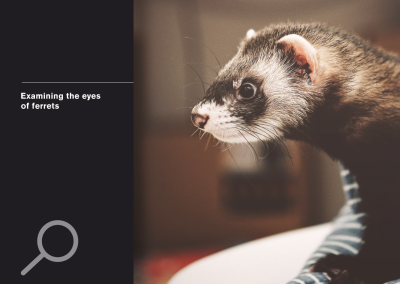
Examining the eyes of ferrets
Ocular diseases in domestic ferrets are rarely reported. This article focused on the most frequent diseases of their cornea and conjunctiva and on practical techniques for accessing the eyes of Mustela putorius furo. In most cases, physically controlli …

News
23 August 2023
Deslorelin implants in domestic rats
Most spontaneous mammary gland tumors in domestic rats are fibroadenomas. The treatment of choice is surgical removal but the appearance of subsequent masses is common due to the presence of persistent hormonal-promoting factors and the difficulty of p …
News
23 August 2023
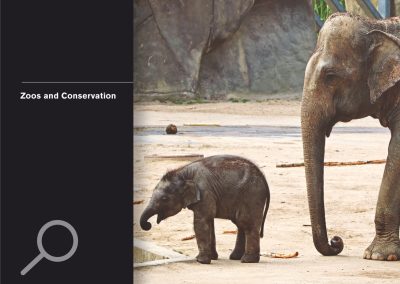
Zoos and Conservation
Today, the global zoo and aquarium community is focused on conservation, education and research, in addition to entertainment. The community’s resources, mainly originating from visitor attendance revenue, make it the third largest in situ contributor …
News
23 August 2023
How can pesticides affect honeybees?
How can pesticides affect honeybees? Pesticides are used worldwide in agriculture because of their effectiveness in controlling pests. However, they can also affect honeybees by direct topical contact or through secondary exposure via the consumption …
News
23 August 2023
CASE REPORT: Neurobrucellosis in a common bottlenose dolphin
Since the first description of Brucellosis in marine mammals in 1994, reported cases in cetaceans and pinnipeds have been increasing. While the disease has been seen in various cetaceans, pathological findings are unusual and cases of damage to the ner …