News

News
23 August 2023
Diet and physiotherapy in post-surgery recovery
The authors of this study set out to measure the effects of a diet rich in omega-3 fatty acid and of physical rehabilitation on the onset of osteoarthritis (OA) in dogs which suffered from cranial cruciate ligament disease (CCL). 48 dogs with unilatera …

News
23 August 2023
Therapeutic exercises in cats
While cats may not seem the most likely candidates for therapeutic exercise (TE), it is possible to create treatment plans that can benefit most patients. TE aims to increase the range of motion in joints, improve muscle strength and limb use, as well …

News
23 August 2023
Electrical stimulation in pets
Electrical stimulation is an attractive option for veterinary physical therapy as it’s a cost-effective way to support recovery following injury or surgery. It can be used to: not only to control pain improve the range of motion in damaged joints, red …

News
23 August 2023
Characterization of ocular melanosis in dogs
Cairn Terriers can suffer from a hereditary form of bilateral ocular melanosis (OM). It causes the accumulation of large and darkly pigmented melanocytes in the anterior uvea which may damage ocular structures. The progression of this pathology is slow …
News
23 August 2023
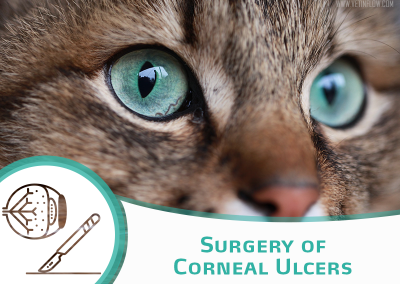
Surgery of corneal ulcers
Corneal ulcers are commonly found in cats suffering with feline herpesvirus infection with medical therapy is often indicated. Because of the delicate anatomy of the cornea and the complexity of the surgery, the decision between medical and surgical t …
News
23 August 2023
Changes in intraocular pressure during propofol anesthesia
Evidence suggests that some anesthetic drugs increase intraocular pressure (IOP) which could lead to complications, including the loss of globe contents through surgical or traumatic wounds and/or blindness. A study set out to establish the IOP cut-off …

News
23 August 2023
Color Vision in Chinchillas
Chinchillas are nocturnal and had been thought of as animals with a pure rod retina – but new research has shown that this is not true. Few animals have no cones at all in their retinas and, aside from some species of deep-sea fish and nocturnal reptil …
News
23 August 2023
Characterization of hepatic masses in dogs with CT scans and ultrasound exam
As dogs age, they can develop benign hepatic masses. Fortunately, few of these require special treatment but some do and it is important to be able to distinguish them from benign neoplastic growths. CT scans and ultrasounds can be used to characterize …

News
23 August 2023
Excretory urography and urinary system diagnosis in domestic rabbits
Ultrasound and survey radiographs can be useful for the diagnosis of urinary function but their value is limited. Survey radiographs offer little insight into renal and upper urinary issues because of low tissue contrast while ultrasounds can be made d …

News
23 August 2023
CT scan ‘tree-in-bud’ pattern and bronchial disease in cats
The ‘tree-in-bud’ pattern found during Computed Tomography (CT) scans is used in human medicine to help diagnose problems in the bronchi. It is characteristic of centrilobular bronchiolar dilation that could be caused by bronchial/bronchiolar plugging …
News
23 August 2023
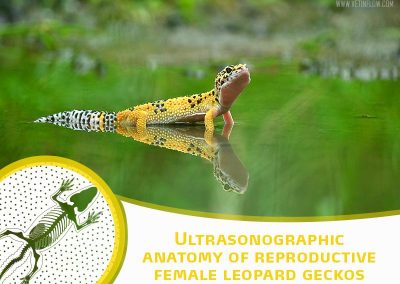
Ultrasonographic anatomy of reproductive female leopard geckos
Leopard geckos are a popular species of small reptile. They suffer from common conditions including gastrointestinal impaction, follicular stasis, dystocia, neoplasia and lesions in the hemipene. Ultrasound imaging is very accessible and can be used to …

News
23 August 2023
Bronchial collapse during forced expiration in CT scans and radiographs exams in dogs
Tracheobronchomalacia refers to an imperfection of the trachea, main bronchi and/or other smaller airways supported by hyaline cartilage. It’s often diagnosed with the help of CT scans and radiographs by measuring the luminal diameter of the bronchus. …
News
23 August 2023
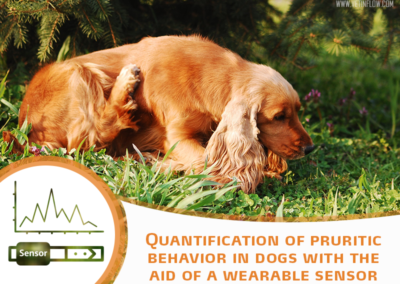
Quantification of pruritic behavior in dogs with the aid of a wearable sensor
Pruritus is common in many skin disorders and it manifests through several types of behaviors. Until now, research into objective identification systems has used wearable sensors with limited functionality that could only capture differences in activit …

News
23 August 2023
Generalised demodicosis and doramectin
Demodex canis mites are normally found inside the hair follicles of healthy dogs and demodicosis results from an abnormal and excessive proliferation of these organisms. Young dogs affected by this disease tend to show a genetic predisposition linked t …
News
23 August 2023
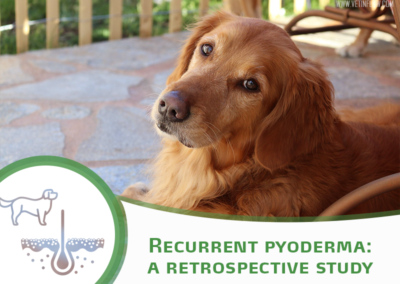
Recurrent pyoderma: a retrospective study
Pyoderma is usually caused by bacteria that inhabit the dog’s skin ( (this sounds strange to me). The infection begins when the skin barrier becomes compromised, allowing an abnormal proliferation of these opportunistic agents. Staphylococcus pseudinte …